Intro
On 31 January 1939, Eid-ul-Adha was celebrated at the Fazl Mosque in London. On this occasion, a reception was held at the Fazl Mosque which was attended by various dignitaries. The then Imam of the Fazl Mosque, Maulana Jalal-ud-Din Shams expressed his concerns over the deteriorating situation in Palestine and called the British Government’s attention towards making efforts for peace in Palestine. He also praised the efforts of the British Prime Minister towards the peace of Europe. He mentioned a telegram from Musleh-e-Maud (The 2nd Qadiani Khalifa) as well, which was sent to the British Prime Minister, appreciating his peace efforts amidst the conflict between major powers of Europe.
On 7 February 1939, the Conference on the Palestine issue began in London. The Birmingham Mail reported under the heading “Palestine Talks”. On 11 March 1939, Maulana Jalal-ud-Din Shams invited the Viceroy of Mecca and representatives of Palestine, Iraq and Yemen — who were in London for the Palestine Conference — to a reception at the Fazl Mosque in which 200 guests participated in total, including various dignitaries.
Mirza Bashir-ud-Din Mahmud Ahmad, sent a special message to the Arab delegates through a telegram. The message was read out in both English and Arabic by Hazrat Maulana Jalal-ud-Din Shams.
In his message, Mirza Bashir-ud-Din Mahmud Ahmad said:
“Welcome His Royal Highness the Amir Faisal and the Palestine Conference delegates, on my behalf, and tell them that the Community is completely with them, and prays that God may give them success and may help all Arab States on the path of prosperity and give them the leadership of the Muslim world—the leadership which they possessed in the early centuries of Islam.” (“The Ahmadiyya Khilafat’s call for Muslim unity: The solution to Israel-Palestine issue”, Al Hakam, 21 May 2021, Issue 166, pp. 21-23)

_____________________________________________________________________________________________
Ahmadiyya advocacy for Palestinian rights: A historical examination of Arab-Jewish tensions in 1939 (alhakam.org)
Ahmadiyya advocacy for Palestinian rights: A historical examination of Arab-Jewish tensions in 1939
Ata-ul-Haye Nasir and Tahmeed Ahmad, Ahmadiyya Archive & Research Centre

Following in the footsteps of the Promised Messiahas, the Khulafa of Ahmadiyyat have always urged Muslims to unite for the defence of Muslim countries, people, and Islam as a whole. The same was the case on the issue of Palestine, as the history of Ahmadiyyat testifies to the fact that Khulafa-e-Ahmadiyyat have continuously raised their voice for the rights of the oppressed Muslims of Palestine. In accordance with the guidance from Khalifa of the time, the Ahmadi missionaries serving all over the world have raised their voice for Palestinian Muslims and the rights of oppressed nations everywhere.
Readers can find various articles in Al Hakam that shed light on Jamaat-e-Ahmadiyya’s services for the Muslim world in general and Palestinian Muslims in particular. This article will only focus on the Ahmadiyya Jamaat’s support for the Arab world amidst the delicate situation in Palestine in 1938-39.
Before delving into this, it is important to mention what led to such turbulent circumstances. So, let us go back to 1917.
Balfour Declaration
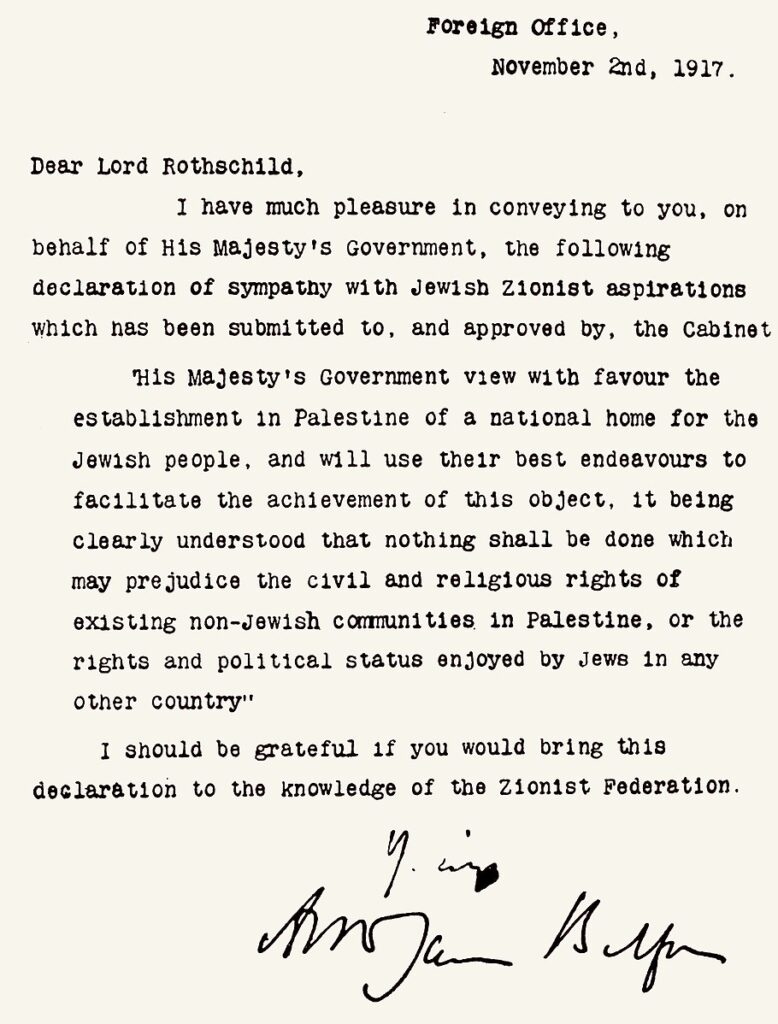
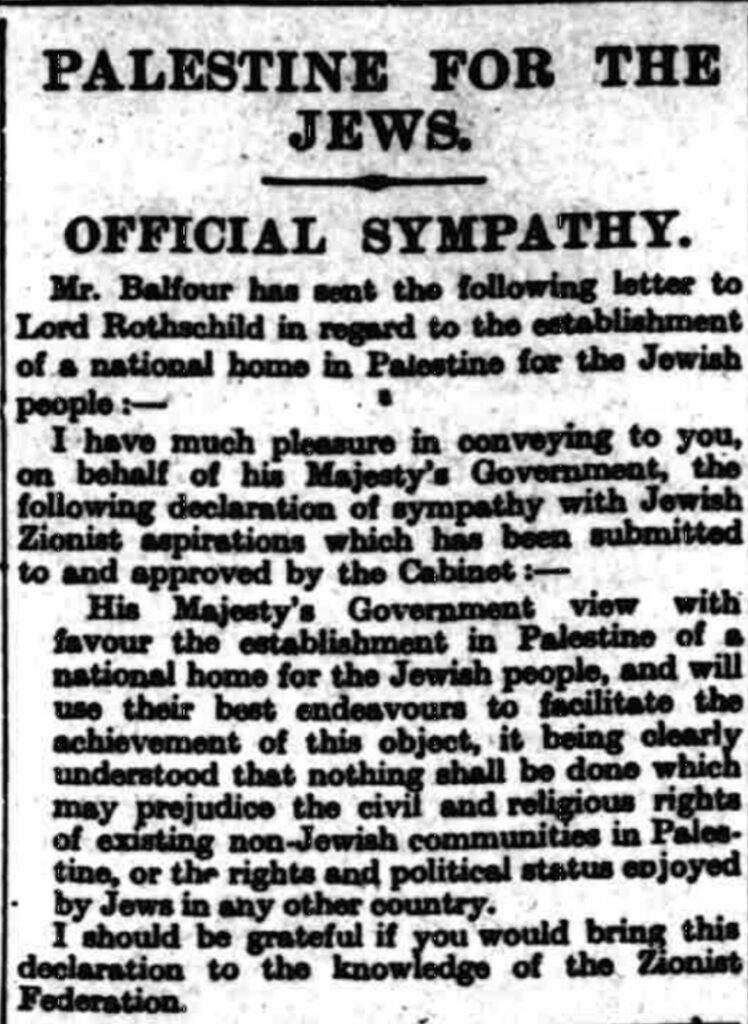
In November 1917, a public statement was issued by the British Government during World War I, known as the Balfour Declaration. In this statement, they announced their support for “the establishment in Palestine of a national home for the Jewish people.” This statement was contained in a letter – dated 2 November 1917 – from the then British Foreign Secretary Arthur James Balfour to a leader of the Anglo-Jewish community, Lionel Walter Rothschild. This statement was published in the press on 9 November 1917.
This pledge is generally viewed as one of the main catalysts of the Nakba, the mass displacement and dispossession of Palestinians during the 1948 Arab-Israeli war. The statement “was included in the terms of the British Mandate for Palestine after the dissolution of the Ottoman Empire.” Upon the outset of “the mandate, the British began to facilitate the immigration of European Jews to Palestine. Between 1922 and 1935, the Jewish population rose from nine per cent to nearly 27 per cent of the total population.” In essence, “the Balfour Declaration promised Jews a land where the natives made up more than 90 per cent of the population.” (“More than a century on: The Balfour Declaration explained”, http://www.aljazeera.com, 2 November 2018)
Issues faced by the local Arabs
By the end of the first decade of the British Mandate, 120,000 Jews had migrated to Palestine; by the end of the second, another 300,000. The price of land had soared to the point where it was no longer possible for the local common Arabs to maintain even smaller pieces of land, let alone purchase them anymore. The Jewish settlers, arriving and thriving under British patronage, set out on a spree of purchasing land. In a very short amount of time, Tel Aviv and its surrounding areas were flying high in their newfound technological and agricultural boom. It was quite natural for the local Arab Muslims to see this as a foreign encroachment into their lands. (“Borders of the Holy Land: A brief study in theology and geopolitics”, http://www.alhakam.org)
Palestine’s volatile condition in 1939
During the latter part of the 1930s, on the one hand, Europe was on the brink of a disastrous war, and on the other, Palestine was going through a very volatile situation.
Narrating about the situation in Palestine, Michael J Cohen from the Bar-Ilan University of Israel stated:
“The [British] Foreign Office and the Chiefs of Staff had since 1937 been stressing the need to settle the Palestine question in a manner ‘satisfactory’ to the Arab States. The year 1938 proved to be one of crisis, both in Europe and in Palestine. Events reached their climax almost simultaneously in both areas. At the same time as Britain was taking emergency measures in view of the Munich crisis, the government awaited with trepidation the Report of the Woodhead Commission, sent to Palestine the previous March, in order to work out the technical details for a partition of Palestine. […] From the beginning of 1938, British strategical thinking on the Eastern Mediterranean had two main aims. The first was the provision of a Middle Eastern Reserve force, which, while acting as a police force in Palestine if necessary, would have as its main task the defence of the Suez Canal. Second, apart from the priority given to the settlement of the Palestine problem politically, the Middle Eastern (Official) Sub-Committee of the Committee of Imperial Defence was charged in March 1938 with devising measures to influence the Minor Powers and Arab States in the Near East. […] In January 1939, the Middle Eastern Sub-Committee submitted its final, detailed report back to its parent body. The report was prefaced by another reminder of the effect which British policy in Palestine was having in the Arab countries:
“‘We feel it is necessary to point out at the outset, as an essential part of our report, the strong feeling which exists in all Arab States in connection with British policy in Palestine. It is evident that by far the most important measure which could be taken to influence the Arab States in favour of the United Kingdom would be our Palestine policy. We assume that, immediately on the outbreak of war, the necessary measures would at once be taken… in order to bring about a complete appeasement of Arab opinion in Palestine and in neighbouring countries… if we fail thus to retain Arab goodwill at the outset of a war, no other measures which we can recommend will serve to influence the Arab States in favour of this country…’” (Cohen, Michael J. “Appeasement in the Middle East: The British White Paper on Palestine, May 1939”, The Historical Journal, 16, no. 3 (1973): 571–96, www.jstor.org/stable/2638205)
Plan for a conference in London on the Palestine issue
In light of the above-mentioned situation in Palestine, the British government organised a conference of the Arab countries in relation to the issue of Palestine in February and March 1939. The aim was to discuss the situation in Palestine and find solutions for its peace.
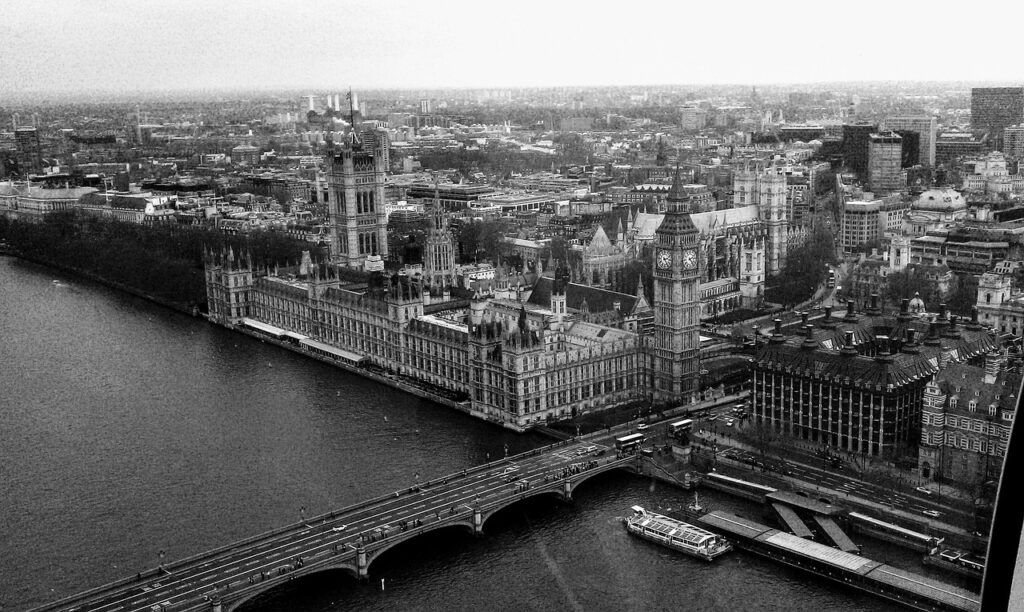
On 24 November 1938, the then British Secretary of State for the Colonies, Mr Malcolm MacDonald, spoke at the British Parliament about the worrying situation in Palestine and said:
“I hope that I may appeal to Hon. Members this afternoon, when we are about to enter into discussions with representatives of the Arabs and the Jews in London, to conduct this debate with such a wise judgement that no word which is spoken here shall prejudice the chance of these discussions bearing, at last, the fruit of an Arab-Jewish agreement. During the last few months, a constructive political effort to ease the situation in Palestine has not been possible. It was unfortunate, but it was inevitable. We had to await the presentation of the Woodhead Commission’s Report, and so our attention has been concentrated on the mere physical effort to restore law and order in that country.” (Hansard, HC Deb, 24 November 1938, Vol. 341, c. 1987, https://hansard.parliament.uk)
Eid-ul-Adha at the Fazl Mosque, 1939
On 31 January 1939, Eid-ul-Adha was celebrated at the Fazl Mosque in London. On this occasion, a reception was held at the Fazl Mosque which was attended by various dignitaries. The then Imam of the Fazl Mosque, Hazrat Maulana Jalal-ud-Din Shamsra expressed his concerns over the deteriorating situation in Palestine and called the British Government’s attention towards making efforts for peace in Palestine. He also praised the efforts of the British Prime Minister towards the peace of Europe. He mentioned a telegram from Hazrat Musleh-e-Maudra as well, which was sent to the British Prime Minister, appreciating his peace efforts amidst the conflict between major powers of Europe.
Reporting on this event, the South Western Star wrote:
“Muslim Festival
“A Meeting at Southfields Mosque
“Praise for Prime Minister
“The Imam of the London Mosque, Southfields, Maulvi J. D. Shams, praised the Prime Minister for preserving peace, and gave his views on the Palestine question, at a meeting at the mosque on Tuesday afternoon. Lieut.-Col. Sir Francis Younghusband, K.C.S.I., K.C.I.E., was in the chair. The occasion was the festival of ‘ld-ul-Azha, or ‘Festival of Sacrifices.’
“‘This occasion should not pass without tendering our gratitude to the Prime Minister, Mr. Chamberlain,’ said the Imam. ‘Since the last occasion of this festival, a grave crisis nearly brought Europe to the brink of the horrors of war. Mr. Chamberlain’s sincere efforts in preserving the peace, which is the aim of us all, deserve our heartiest thanks. The Head of the Ahmadiyya Community sent a telegram to the Prime Minister congratulating him on his courageous efforts for peace, and expressing the hope that he will make similar efforts for peace in Palestine and India.’
“An Alarming Thought
“‘To the Arabs of Palestine, the thought of being outnumbered and swamped by the Jews is very alarming. They will never tolerate it. Let the delegates who have come to London, and the Government, view the whole question in the true spirit of sincerity and impartiality. Let them evolve a solution, which, if not found now, will be difficult to achieve at a later date.’
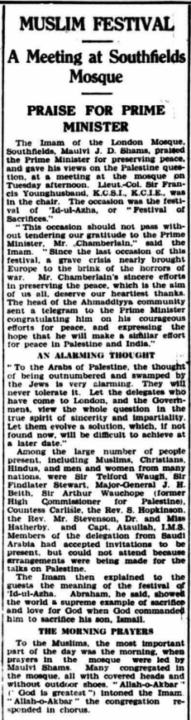
“Among the large number of people present, including Muslims, Christians, Hindus, and men and women from many nations, were Sir Telford Waugh, Sir Findlater Stewart, Major-General J. H. Beith, Sir Arthur Wauchope (former High Commissioner for Palestine), Countess Carlisle, the Rev. S. Hopkinson, the Rev. Mr. Stevenson, Dr. and Hatherby, and Capt. Ataullah, I.M.S. Members of the delegation from Saudi Arabia had accepted invitations to be present, but could not attend because arrangements were being made for the talks on Palestine.
“The Imam then explained to the guests the meaning of the festival of ld-ul-Azha. Abraham[as], he said, showed the world a supreme example of sacrifice and love for God when God commanded him to sacrifice his son, Ismail[as].
“The Morning Prayers
“To the Muslims, the most important part of the day was the morning, when prayers in the mosque were led by Maulvi Shams. Many congregated in the mosque, all with covered heads and without outdoor shoes. ‘Allah-o-Akbar’ (God is greatest) intoned the Imam. ‘Allah-o-Akbar’ the congregation responded in chorus.” (South Western Star, 3 February 1939, p. 5)
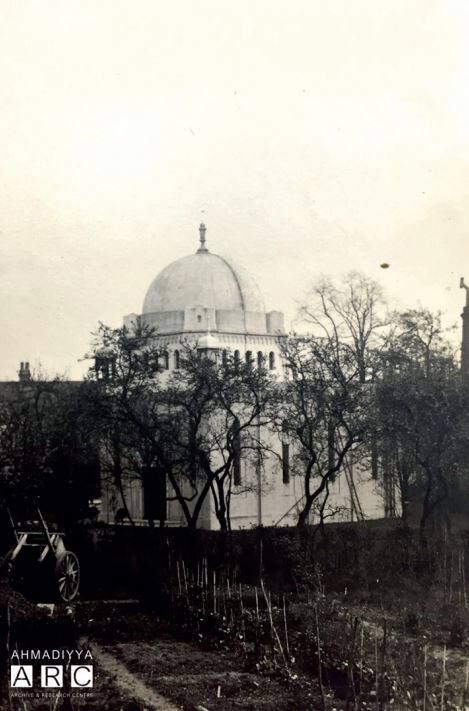
The appreciation of the British Prime Minister, Arthur Neville Chamberlain (1869-1940), by Hazrat Musleh-e-Maudra was due to his efforts to bring Britain and Germany to an agreement to avoid any war in the future. This agreement is commonly known as the Munich Agreement of 1938.
When this agreement took place, the Belfast News-Letter reported:
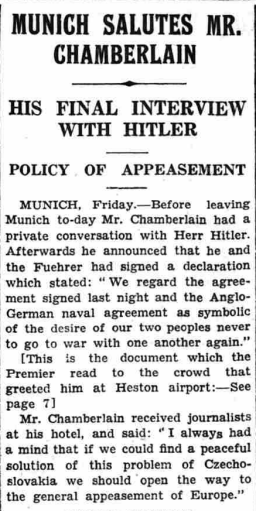
“Munich, Friday.—Before leaving Munich today Mr. Chamberlain had a private conversation with Herr Hitler. Afterwards, he announced that he and the Fuehrer had signed a declaration which stated: ‘We regard the agreement signed last night and the Anglo-German naval agreement as symbolic of the desire of our two peoples never to go to war with one another again.’
“[This is the document which the Premier read to the crowd that greeted him at Heston airport:—See page 7]
“Mr. Chamberlain received journalists at his hotel, and said: ‘I always had a mind that if we could find a peaceful solution of this problem of Czecho-Slovakia we should open the way to the general appeasement of Europe.’” (Belfast News-Letter, 1 October 1938, p. 9)
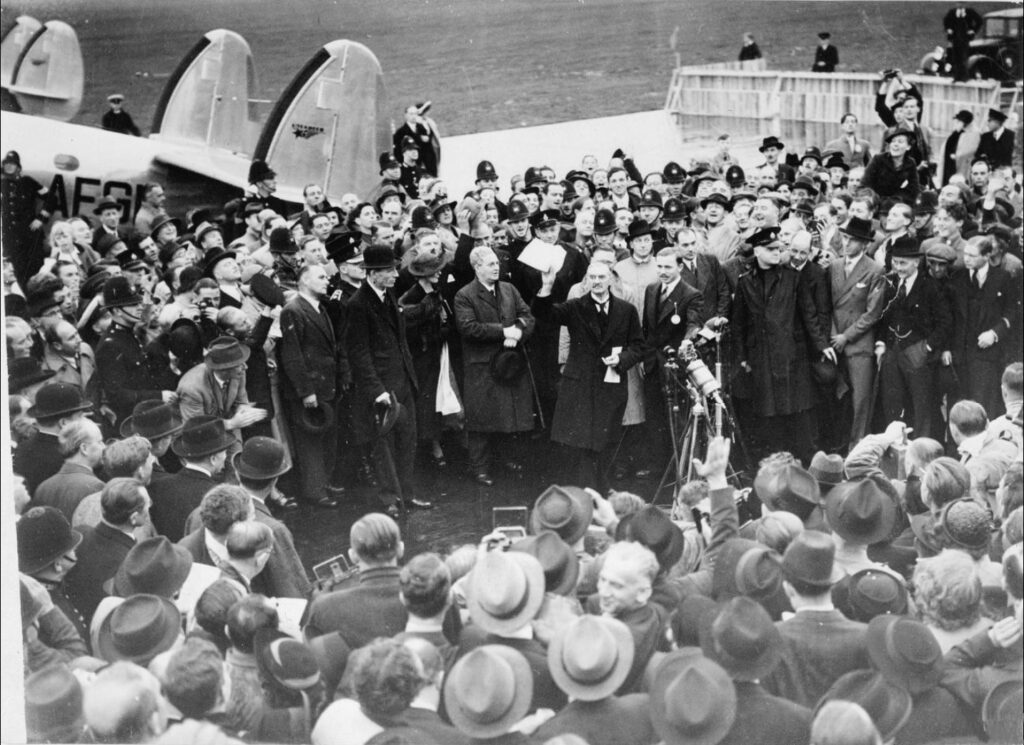
Opening of the Palestine Conference in London
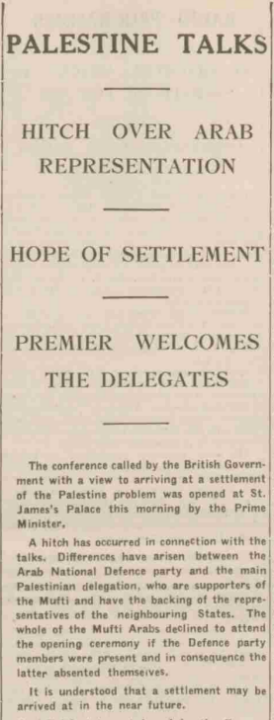
On 7 February 1939, the Conference on the Palestine issue began in London. The Birmingham Mail reported under the heading “Palestine Talks”:
“Hitch Over Arab Representation
“Hope of Settlement
“Premier Welcomes the Delegates
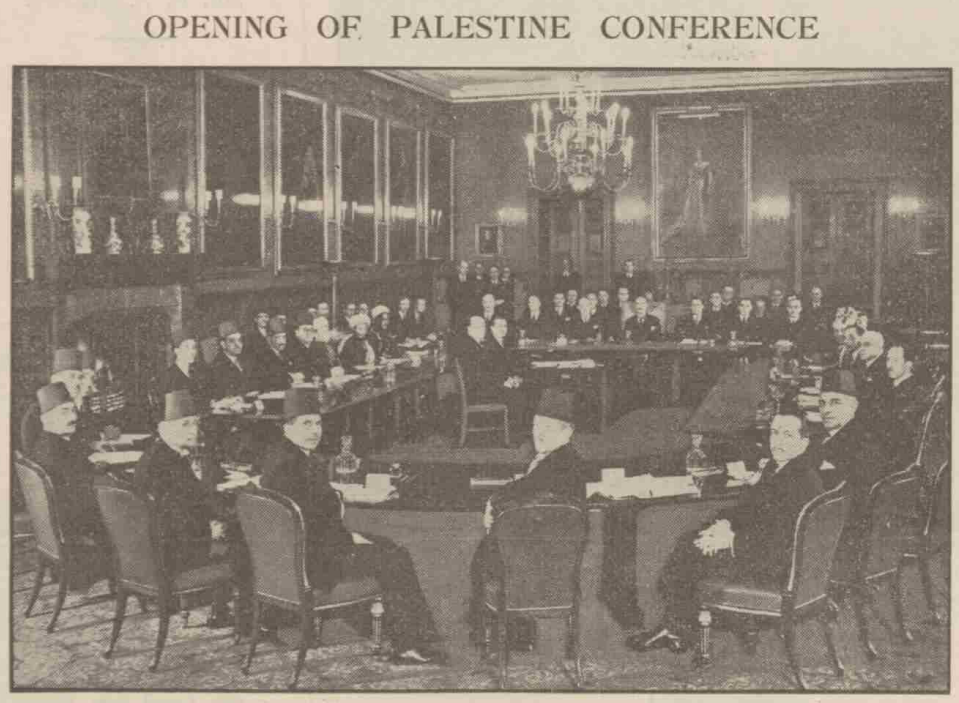
“The conference called by the British Government with a view to arriving at a settlement of the Palestine problem was opened at St. James’s Palace this morning by the Prime Minister.
“A hitch has occurred in connection with the talks. Differences have arisen between the Arab National Defence Party and the main Palestinian delegation, who are supporters of the Mufti and have the backing of the representatives of the neighbouring States. The whole of the Mufti Arabs declined to attend the opening ceremony if the Defence party members were present, and in consequence, the latter absented themselves.
“It is understood that a settlement may be arrived at in the near future.
“An official statement issued by the Government stated that efforts had been made to arrange with the different parties of Palestine Arabs for them all to be represented on one delegation.” (The Birmingham Mail, 7 February 1939, p. 6)
Reception at the Fazl Mosque
On 11 March 1939, Hazrat Maulana Jalal-ud-Din Shamsra invited the Viceroy of Mecca and representatives of Palestine, Iraq and Yemen — who were in London for the Palestine Conference — to a reception at the Fazl Mosque in which 200 guests participated in total, including various dignitaries.
Special message from Hazrat Musleh-e-Maudra
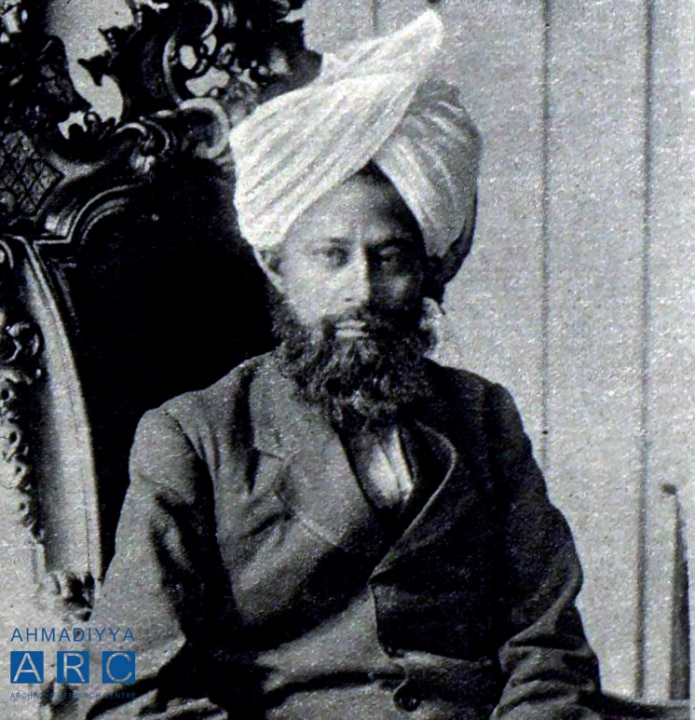
Hazrat Musleh-e-Maudra, Mirza Bashir-ud-Din Mahmud Ahmadra, sent a special message to the Arab delegates through a telegram. The message was read out in both English and Arabic by Hazrat Maulana Jalal-ud-Din Shamsra.
In his message, Huzoorra said:
“Welcome His Royal Highness the Amir Faisal and the Palestine Conference delegates, on my behalf, and tell them that the Community is completely with them, and prays that God may give them success and may help all Arab States on the path of prosperity and give them the leadership of the Muslim world—the leadership which they possessed in the early centuries of Islam.” (“The Ahmadiyya Khilafat’s call for Muslim unity: The solution to Israel-Palestine issue”, Al Hakam, 21 May 2021, Issue 166, pp. 21-23)
Proceedings of the reception
Many newspapers covered this event, such as the Sunday Express, South Western Star, Wimbledon Borough New, and Wandsworth Borough News.
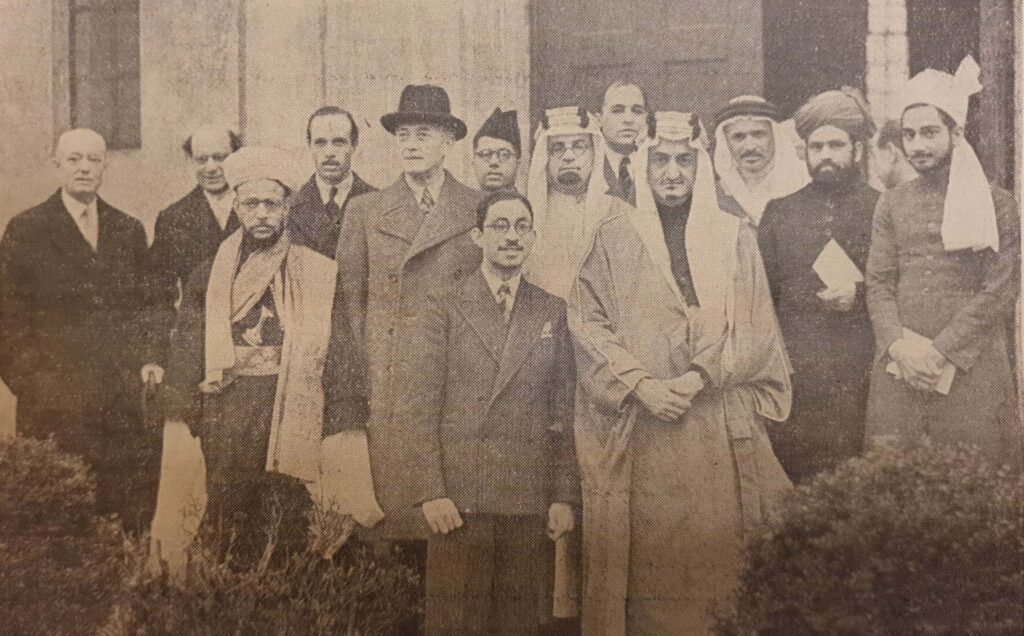
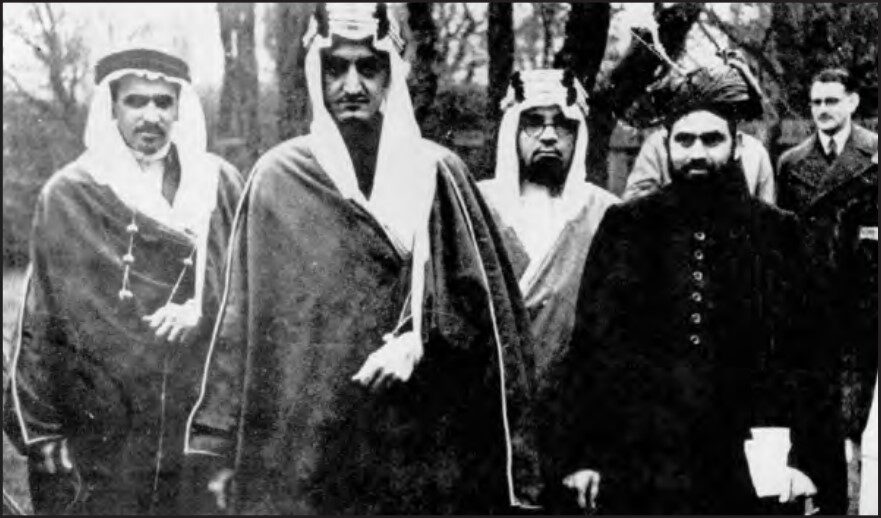
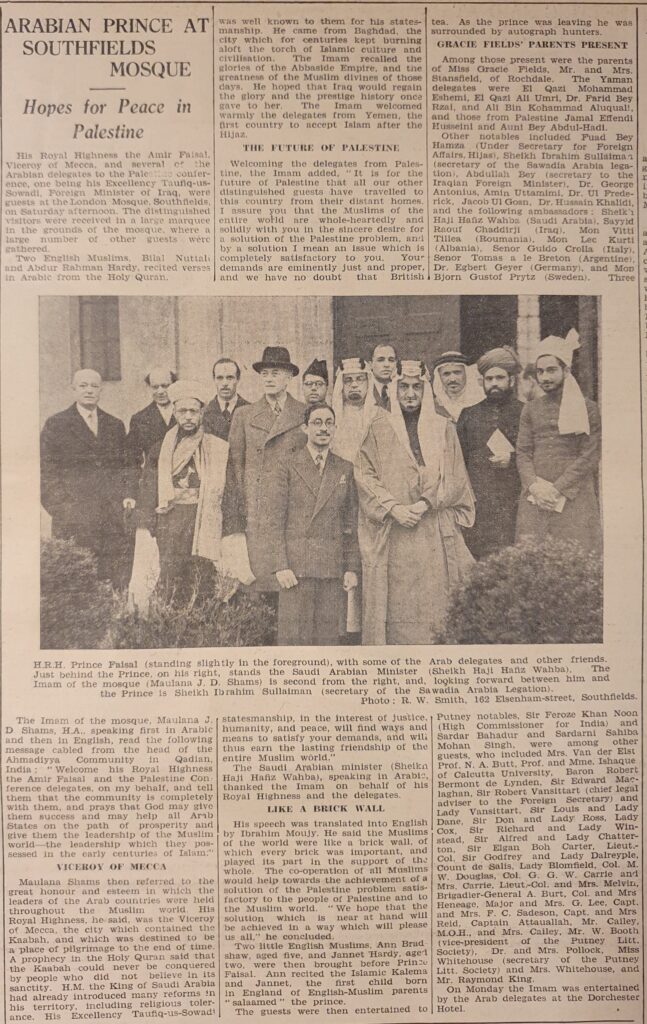
The South Western Star published a lengthy article, along with a group photo, with the following caption:
“H.R.H. Prince Faisal (standing slightly in the foreground), with some of the Arab delegates and other friends. Just behind the Prince, on his right, stands the Saudi Arabian Minister (Sheikh Haji Hafiz Wahba). The Imam of the mosque (Maulana J. D. Shams) is second from the right, and, looking forward between him and the Prince is Sheikh Ibrahim Sullaiman (secretary of the Sawadia Arabia Legation). Photo: R. W. Smith, 162 Elsenham-street, Southfields.”
The article stated:
“Arabian Prince at Southfields Mosque
“Hopes for Peace in Palestine
“His Royal Highness the Amir Faisal, Viceroy of Mecca, and several of the Arabian delegates to the Palestine conference, one being his Excellency Taufiq-us-Sowadi, Foreign Minister of Iraq, were guests at the London Mosque, Southfields, on Saturday afternoon. The distinguished visitors were received in a large marquee in the grounds of the mosque, where a large number of other guests were gathered.
“Two English Muslims, Bilal Nuttal and Abdur Rahman Hardy, recited verses in Arabic from the Holy Quran.
“The Imam of the mosque, Maulana J. D Shams, H.A. speaking first in Arabic and then in English, read the following message cabled from the head of the Ahmadiyya Community in Qadian, India: ‘Welcome his Royal Highness the Amir Faisal and the Palestine Conference delegates, on my behalf, and tell them that the Community is completely with them, and prays that God may give them success and may help all Arab States on the path of prosperity and give them the leadership of the Muslim world—the leadership which they possessed in the early centuries of Islam.’
“Viceroy of Mecca
“Maulana Shams then referred to the great honour and esteem in which the leaders of the Arab countries were held throughout the Muslim world. His Royal Highness, he said, was the Viceroy of Mecca, the city which contained the Kaabah, and which was destined to be a place of pilgrimage to the end of time. A prophecy in the Holy Quran said that the Kaabah could never be conquered by people who did not believe in its sanctity. H.M. the King of Saudi Arabia had already introduced many reforms in his territory, including religious tolerance. His Excellency Taufiq-us-Sowad was well known to them for his statesmanship. He came from Baghdad, the city which for centuries kept burning aloft the torch of Islamic culture and civilisation. The Imam recalled the glories of the Abbasid Empire and the greatness of the Muslim divines of those days. He hoped that Iraq would regain the glory and the prestige history once gave to her. The Imam welcomed warmly the delegates from Yemen, the first country to accept Islam after the Hijaz.
“The Future of Palestine
“Welcoming the delegates from Palestine, the Imam added, ‘It is for the future of Palestine that all our other distinguished guests have travelled to this country from their distant homes. I assure you that the Muslims of the entire world are whole-heartedly and solidly with you in the sincere desire for a solution of the Palestine problem, and by a solution I mean an issue which is completely satisfactory to you. Your demands are eminently just and proper, and we have no doubt that British statesmanship, in the interest of justice, humanity, and peace, will find ways and means to satisfy your demands, and will thus earn the lasting friendship of the entire Muslim world.’
“The Saudi Arabian minister (Sheikh Haji Hafiz Wahba), speaking in Arabic, thanked the Imam on behalf of his Royal Highness and the delegates.
“Like a Brick Wall
“His speech was translated into English by Ibrahim Moujy. He said the Muslims of the world were like a brick wall, of which every brick was important, and played its part in the support of the whole. The cooperation of all Muslims would help towards the achievement of a solution to the Palestine problem satisfactory to the people of Palestine and to the Muslim world. ‘We hope that the solution which is near at hand will be achieved in a way which will please us all,’ he concluded.
“Two little English Muslims, Ann Bradshaw, aged five, and Jannet Hardy, aged two, were then brought before Prince Faisal. Ann recited the Islamic Kalema and Jannet, the first child born in England of English-Muslim parents ‘salaamed’ the prince.
“The guests were then entertained to tea. As the prince was leaving he was surrounded by autograph hunters.
“Gracie Fields’ Parents Present
“Among those present were the parents of Miss Gracie Fields, Mr. and Mrs. Stansfield, of Rochdale. The Yemen delegates were El Qazi Mohammad Eshemi, El Qazi Ali Umri, Dr. Farid Bey Rzai, and Ali Bin Mohammad Aluquali, and those from Palestine Jamal Efendi Husseini and Auni Bey Abdul-Hadi.
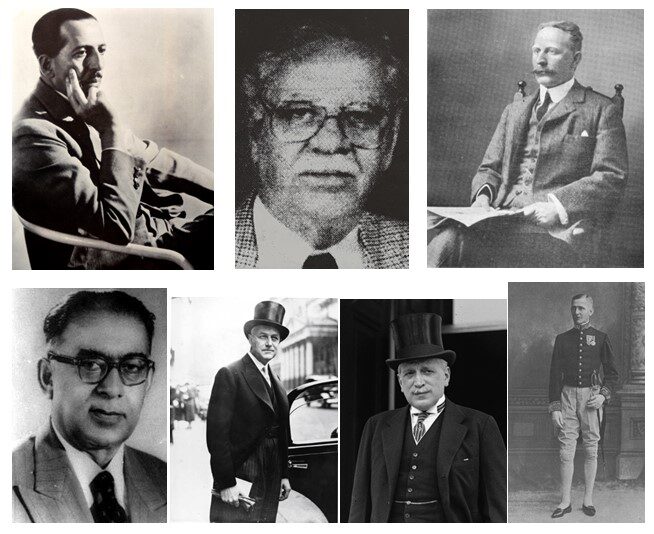
“Other notables included Fuad Bey Hamza (Under Secretary for Foreign Affairs, Hijaz), Sheikh Ibrahim Sullaiman (secretary of the Sawadia Arabia legation), Abdullah Bey (secretary to the Iraqian Foreign Minister), Dr. George Antonius, Amin Uttamimi, Dr. Ul Frederick, Jacob Ul Gosn, Dr. Hussain Khalidi, and the following ambassadors: Sheikh Haji Hafiz Wahba (Saudi Arabia), Sayyid Raouf Chaddirji (Iraq), Mon Vitti Tillea [sic., Viorel Virgil Tilea] (Roumania), Mon Lec Kurti (Albania), Senor Guido Crolla (Italy), Senor Tomas a le Breton (Argentine), Dr. Egbert Geyer (Germany), and Mon Bjorn Gustof Prytz (Sweden). Three Putney notables, Sir Feroze Khan Noon (High Commissioner for India) and Sardar Bahadur and Sardarni Sahiba Mohan Singh, were among other guests, who included Mrs. Van der Kist, Prof. N. A. Butt, Prof. and Mme. Ishaque of Calcutta University, Baron Robert Bermont de Lynden, Sir Edward Maclaghan, Sir Robert Vansittart (chief legal adviser to the Foreign Secretary) and Lady Vansittart, Sir Louis and Lady Dane, Sir Don and Lady Ross, Lady Cox, Sir Richard and Lady Winstead, Sir Alfred and Lady Chatterton, Sir Elgan Boh Carter, Lieut.-Col. Sir Godfrey and Lady Dalrymple, Count de Salis, Lady Blomfield, Col. M. W. Douglas, Col. G. G. W. Carrie and Mrs. Carrie, Lieut.-Col. and Mrs. Melvin, Brigadier-General A. Burt, Col. and Mrs Heneage, Major and Mrs. G. Lee, Capt. and Mrs. F. C. Sadeson, Capt. and Mrs Reid, Captain Attauallah, Mr. Cailey, M.O.H., and Mrs. Cailey, Mr. W. Booth (vice-president of the Putney Litt. Society). Dr. and Mrs. Pollock, Miss Whitehouse (secretary of the Putney Litt. Society) and Mrs. Whitehouse, and Mr. Raymond King.
“On Monday the Imam was entertained by the Arab delegates at the Dorchester Hotel.” (South Western Star, 17 March 1939, p. 10)
Palestine Conference fails
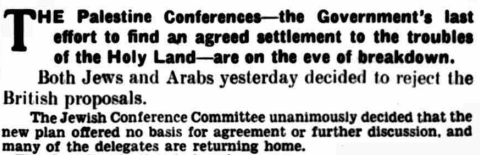
As far as the result of the Palestine Conference is concerned, it ultimately failed to bring out any peaceful and unanimous solution to the conflict. The Daily News Chronicle reported under the heading “Jews and Arabs reject Britain’s Final Plan”:
“The Palestine Conferences – the Government’s last effort to find an agreed settlement to the troubles of the Holy Land – are on the eve of breakdown.
“Both Jews and Arabs yesterday decided to reject the British proposals.
“The Jewish Conference Committee unanimously decided that the new plan offered no basis for agreement or further discussion, and many of the delegates are returning home.” (Daily News Chronicle, 17 March 1939, p. 1)
_____________________________________________________________________________________________
The Ahmadiyya Khilafat’s call for Muslim unity: The solution to Israel-Palestine issue
The Ahmadiyya Khilafat’s call for Muslim unity: The solution to Israel-Palestine issue
Ata-ul-Haye Nasir, Al Hakam
Following in the footsteps of Hazrat Mirza Ghulam Ahmadas, the Khulafa of Ahmadiyyat have always urged Muslims to unite for the victory and protection of Muslim countries, people and Islam as a whole. The need for this unity is being felt more than ever today and cries for a khilafat have been seen by all even during the current crisis in Palestine.
Need for practical efforts
With recent atrocities against the Palestinians, it is a shame that Muslim countries are not united so as to speak up for them. We don’t see any practical efforts on their part to tackle the issue either.
The OIC (Organisation of Islamic Cooperation) deemed it sufficient to merely “condemn” Israel’s brutal aggression against the Palestinian people, in an emergency meeting on 16 May 2021. Pakistan – whose first foreign minister, Hazrat Sir Zafrulla Khanra strived hard for the Palestinian cause in the United Nations – has now sufficed on merely passing a resolution of condemnation in its parliament.
The current conflict has exposed the differences among the Muslims states. “For the first time in the many clashes between the two foes, regional unity over who is to blame and what should be done to stop the fighting has splintered”, reported The Guardian on 17 May 2021.
Some Muslim majority countries, such as Turkey and Iran, have spoken against Israel’s atrocities, but the UAE, Bahrain, Morocco and Sudan, “which all recently normalised ties with Israel, now find themselves balancing their new relationships against citizens who have been vocal in their anger at Israel’s violence” reported The Guardian.
Historically, the Ahmadiyya Khilafat actually urged Muslims to unite for the protection of Muslim majority lands, especially Palestine.
1939 Palestine Conference in London

In February 1939, when the British government organised a conference of the Arab countries in relation to the issue of Palestine, Hazrat Maulana Jalaluddin Shamsra, an Ahmadi missionary, invited the viceroy of Mecca and representatives of Palestine, Iraq and Yemen to a dinner party in which 200 guests participated, including many dignitaries.
Hazrat Mirza Bashiruddin Mahmud Ahmad, Khalifatul Masih IIra sent a telegram which was read out in both English and Arabic. Huzoorra said:
“Welcome his Royal Highness the Amir Faisal and the Palestine Conference delegates, on my behalf, and tell them that the Community is completely with them, and prays that God may give them success and may help all Arab States on the path of prosperity and give them the leadership of the Muslim world—the leadership which they possessed in the early centuries of Islam.” (South Western Star, 17 March 1939, p. 10; Al Fazl, 16 March 1939, p. 2)

A Quranic prophecy
While commentating on verses 22 to 26 of Surah Saad, Hazrat Khalifatul Masih IIra stated:
“The Holy Quran has stated a prophecy in these verses, which is a similitude and a divine vision in regard to the Latter Days. In this, God Almighty has said that those belonging to the progeny of Davidas, or his followers (who are both Jews and Christians) will possess 99 per cent of the world’s power, and on the opposite, the followers of the Holy Prophetsa would only have 1 per cent. Even then, they [Jews and Christians] would conspire to occupy the remaining 1 per cent [from the Muslims] as well.
“The Holy Quran mentions the word kifalat. […] The European people use the term, ‘Mandate’ for those countries which they have occupied after the recent war [World War II], and the meaning of ‘mandate’ is kifalat [authority]. Nowadays, the same word is being used for Palestine. So, in these verses, it has been told that Christians and Jews would demand from the Muslims in relation to Palestine: ‘Hand over this as well to us’. Now, President [Harry] Truman [of the USA] is sending telegrams that Jews should be allowed to settle in Palestine […].”

Huzoorra raised a pertinent question as to why countries such as America, Australia and England were not ready to let the Jews settle in their respective countries, despite having large areas [of land] in comparison to the area of Palestine. (Al Fazl, 31 October 1945, p. 2)
Al-Inzaar
In 1946, Hazrat Khalifatul Masih IIra, saw a vision in which he was foretold by Allah the Almighty that a delicate time was coming for Islam and Muslims needed to unite to tackle that issue. He wrote an article, titled Al-Inzaar (The Warning), wherein he mentioned his vision in detail and advised the Muslims in this regard. He stated:
“This divine vision has called our attention to the fact that a very delicate time is coming for Islam and Muslims are required to unite in worldly and political matters. Moreover, each person ought to prioritise unity above all other matters because the salvation of Muslims lies in this [unity]. This is a very difficult thing [to achieve], not an easy one. […]
“While narrating this divine vision, I advise each Ahmadi that they should call the attention of the Muslims in their respective circles that ‘Your division will cause your destruction’. At this juncture, you [Muslims] ought to forget about yourselves, your thoughts and your parties and should strive to unite everyone who claims to be a Muslim for the protection of Islam, and should leave aside all differences. […]
“I believe that even now, if the Muslims gather for unity, instead of emphasising the differences, then the future of Islam will not remain dark.” (Al Fazl, 28 August 1946, p. 3)

Pray for the Muslim world
Then, during his Friday Sermon of 30 August 1946, he instructed the Jamaat to especially pray for the Muslim world. He stated:
“The circumstances faced by the Muslims nowadays are very bleak. The identity of the Muslims in places such as India, Palestine, Egypt, Indonesia is in severe danger. […] So, all members [of the Jamaat] should especially pray in these days. The other Muslims [non-Ahmadis] should also be urged to start praying, as there is no other remedy for the Muslims. Until the Muslims step aside from worldliness and the pursuit of luxury and unite for offering all types of sacrifices […] success is impossible.” (Al Fazl, 10 September 1946, p. 2)
Al-Kufru Millatun Wahidah
Two years later, when Israel was established on 14 May 1948, conspiracies regarding Palestine emerged openly and at that time, Hazrat Khalifatul Masih IIra made efforts to awaken the Muslim ummah. He wrote a masterpiece, titled Al-Kufru Millatun Wahidah and called on all Muslims to unite as one.
He stated:
“The day which was prophesied by the Holy Quran and the ahadith hundreds of years ago; the day which was prophesied in the Torah and Gospels; the day which was told to be painful and dangerous for the Muslims has seemingly arrived. Jews are being inhabited in Palestine.
“America and Russia […] seem to be on the same page. And strangely, they both were united on the Kashmir issue as well. […] It is strange that the disputes of Palestine and Kashmir have emerged at the same time. […]
“So, I draw the Muslims’ attention towards this matter that they should understand this delicate time and remember that today, the saying of the Holy Prophetsa:
اَلْكُفْرُ مِلَّةٌ وَّاحِدَةٌ
“[kufr is one nation] is being fulfilled to the letter.” (Al Fazl, 21 May 1948, p. 3)
He further stated:
“The Arab [world] knows that now, the Jews are considering throwing out the Arabs from the [land of] Arabia […] But do the people of Arabia have any strength [to tackle this]? Does this matter belong only to the Arab?
“Obviously, neither the Arabs have any strength for this competition, nor does this matter only belong to the Arabs.
“The question is not about Palestine; it is about Medina. The question is not about Jerusalem; it is about Mecca al-Mukarrimah itself. The question is not about Zaid [A] or Bakr [B]; it is about the honour of the Holy Prophet Muhammadsa.
“The enemy has united against Islam, despite their [internal] disagreements. Will the Muslim [ummah] not unite despite the thousands of reasons for unity?” (Ibid)
Then, in regard to the impact of America and Russia, he said:
“The wealth of America and Russia’s plans and deceits, both are united against the poor Arabs.” (Ibid)
This article had a great impact in Syria, Lebanon, Jordan and other Arab countries. Syrian radio stations aired its summary and many Arabic newspapers published its excerpts, including Al-Yaum, Al-Akhbar, Al-Nasr and Al-Urdan.

A famous and respected journalist of Iraq, Al-Ustadh Ali al-Khayat Affendi stated in an article in his newspaper, Al-Anbaa‘:
“Foreign governments always try to spread hatred among the Muslims through slogans [of some other Muslims], and [they try to urge] some sects to stand for objecting Ahmadis and declaring them infidels […] A representative of a foreign country’s government, residing in Baghdad, called me for a meeting, and after appreciating my style of objection, for flattering me, asked me to start raising objections against the Qadiani Jamaat in my newspaper, in a hurtful manner, as much as possible, because this Jamaat was out of [the pale of] deen.
“This happened when, in 1948, a part of the Holy Land was divided and handed over to the Zionist government and the Israeli state was established. And in my view, the above-mentioned activity of the embassy was, in fact, the practical reaction of the two tracts, which were published by Jamaat-e-Ahmadiyya during the same year when Palestine was divided.
“One tract was titled ‘Hay‘atul Umami al-Muttahidati wa Qararu Taqsimi Falastina’, in which those conspiracies of the Western colonial powers and Zionists were disclosed, in which it was planned to hand over the Palestinian ports to the Jews.
“The second tract was published as ‘Al-Kufru Millatun Wahidah’, in which the Muslims were advised to instil perfect unity.” (Akhbar Al-Anbaa‘ [Baghdad], 21 September 1954, with reference of Mujallah Al-Taqwa, September-October 1989)
So, from this reference alone, we can easily understand the impact of Hazrat Khalifatul Masih II’s masterpiece and how he created great worry among the ranks of the anti-Muslim powers.
Had the Muslim ummah acted on his advice and called for Islamic unity, Muslims would never be in a situation in which they find themselves now.
Lecture at the Law College Lahore
On 12 December 1948, Hazrat Khalifatul Masih IIra delivered a lecture at Law College Lahore, titled “Maujooda Halaat mein Aalam-e-Islam ki Haisiyyat aur uska Mustaqbil” (The Status and Future of the Islamic World in Light of the Current Situation). During the lecture, he stated that the Islamic world’s future is completely safe, provided the Muslims act upon those ways of success which the Holy Quran has prescribed for us.
Huzoorra advised the Islamic countries to dispel their internal enmities and to make trade relations with each other. He added that the Holy Quran has declared tabligh as the best way for Islam’s progress, so the Muslims should pay attention to this. (Al Fazl, 14 December 1948, p. 2)
‘My righteous servants shall inherit the land’
Hazrat Khalifatul Masih IIra stated in his speech of 28 December 1954:
“In the past as well, [the Muslims] had temporarily lost the occupation [of Palestine] twice and have lost it now too. And when we say ‘temporarily’, it necessarily means that the Muslims will again go to Palestine and will rule it. It necessarily means that the Jews will again have to leave it and it necessarily means that Allah the Almighty will enable the Muslims to defeat this whole order which is being established with the help of the UNO and America, and once again let the Muslims settle here. […]
“So, I say ‘temporarily’ because there is a [Quranic] injunction ‘My righteous servants shall inherit the land’ [Ch.21: V. 106]. […] So, the ‘righteous servants’ of God Almighty, the people of Muhammad Rasulullahsa, will surely go to this country [Palestine]. Neither can America’s atomic bombs and H-bombs do anything, nor can the help of Russia do anything. This is God’s decree, which will come to pass eventually, no matter how much power the world exerts.” (Anwar-ul-Ulum, Vol. 25, pp. 80-81)
A heartfelt message to Jamaat-e-Ahmadiyya
Hazrat Mirza Tahir Ahmadrh, after being elected Khalifatul Masih IV on 10 June 1982, sent a heartfelt message to Jamaat-e-Ahmadiyya, in which he urged everyone to pray for the Palestinian Muslims.

He stated that there was a wound in our hearts that was getting more terrifying, deeper and painful by the day, and that was a result of the inhumane atrocities being carried out by Israel against the Muslim world.
He said that Hazrat Khalifatul Masih IIIrh felt this grief severely during the last few days of his life and upon the mention of these oppressions, he would become so grieved that one could see the pain in his eyes.
Hazrat Khalifatul Masih IVrh instructed the Ahmadis:
“So, I call the attention of all Ahmadis – men, women, elders and children – that they should supplicate to Allah with great fervour, that He may have Mercy on everyone who is associated with our master, the Holy Prophet Muhammadsa.” (Al Fazl, 13 June 1982)
Then, during his Friday Sermon of 8 March 1985, Hazrat Khalifatul Masih IVrh stated:
“As far as Jamaat-e-Ahmadiyya’s loyalty to the interest of Islam and the Palestinian Muslims is concerned, it is not a hidden fact or a matter of recent times. By the grace of Allah, Jamaat-e-Ahmadiyya had a deep connection with the Islamic interests of Palestine, even since the time when you [opponents of Ahmadiyyat] did not sense the gravity of the issue and did not even know the true circumstances of Palestine.
“Khulafa of Jamaat-e-Ahmadiyya cautioned the Muslims of Palestine from every danger, and kept them aware, and would present Jamaat-e-Ahmadiyya for every possible help for them.
“And these matters are continuing even prior to the partition [of the Indian subcontinent]; even the Ahrari newspapers had to accept these facts. They have uttered from their mouths and written with their pens that ‘the love showed by Qadian’s Mirza Mahmud Ahmad Sahib[ra] for the people of Islam and the Islamic world, is found very less elsewhere.’
“There was a newspaper of the Ahrar, Zamzam, which was devoted to the opposition of the Jamaat […] wrote in its publication of 19 July 1942: ‘Under the current circumstances, the Khalifa Sahib has shown such righteous indignation for Islam with reference to Egypt and the Holy Land of the Hijaz that we are greatly indebted to him, and by expressing his concern, he has rightly represented the feelings of Muslims.’
“Now, look: if they ever found a spokesperson for the Muslims, he would be an Ahmadi. They considered the leader of Ahmadis to be the best spokesperson [of Islam].” (Khutbat-e-Tahir, Vol. 4, pp. 224-225)

Then, in his next Friday Sermon of 15 March 1985, Hazrat Mirza Tahir Ahmad, Khalifatul Masih IVrh stated that even before the United Nations General Assembly had made the oppressive decision to divide Palestine, Hazrat Khalifatul Masih IIra warned and cautioned the Muslim world, creating a commotion in the Arab and non-Arab countries alike. (Khutbat-e-Tahir, Vol. 4, p. 231)
Huzoorrh continued by stating that Hazrat Mirza Bashiruddin Mahmud Ahmadra wrote a heart-rendering pamphlet and had it circulated in abundance, in which he stated:
“I tell you that today, neither is America your friend, nor is Russia your friend. They have formed a mutual conspiracy against Islam. They have forgotten their own enmities due to the enmity of Islam and have united. Does the Islamic world have any sense of honour? Do they not possess the love for Islam that would allow them to forget their animosity towards each other and unite?”
Huzoorrh added that when that decision of dividing Palestine was passed, Hazrat Musleh-e-Maudra wrote another article, describing the steps Muslims needed to take to help them in winning the lost battle again. (Ibid)
During his Friday Sermon of 11 January 1991, Hazrat Khalifatul Masih IVrh instructed Ahmadis to especially pray that Allah may guide the Muslim world. He stated that the Muslim countries should keep in mind the interests of the Muslim ummah as a whole, instead of only protecting their own interests. He added that if the Arab countries did not remove their internal differences, then there would be no peace in this territory and eventually, Israel would emerge as a bigger power than ever before, and no Arab Muslim power could ever think to act against Israel. (Khutbat-e-Tahir, Vol. 10, pp. 32-33)
Advice to Muslims by Hazrat Khalifatul Masih Vaa
Hazrat Amirul Momineen, Khalifatul Masih Vaa has also called the attention of the Muslim Ummah towards unity and regularly advised them that for removal of the ongoing miseries, Muslims must unite and face the opponents of Islam as a united front by forgetting all internal disputes.

During his Friday Sermon of 23 November 2012, Hazrat Khalifatul Masih Vaa said:
“[…] Israel’s attack on the Palestinians is due to the differences and disunity among the Muslims. There is no Islamic country where all moral values are not being violated due to the religious or political differences, or where horrific stories of oppression against each other are not being created. As a result, in one way or another, we are witnessing oppression [by the Muslims] against each other […] It is my desire that Muslims come to their senses and be united.” (Khutbat-e-Masroor, Vol. 10, p. 719)
Then, during his Friday Sermon of 25 July 2014, Huzooraa stated that the Muslim countries did not have unity and consensus. The governments were oppressing their peoples. Not only was there a lack of unity, but there was also widespread oppression.
Huzooraa added that the result of this lack of unity and consensus was that non-Muslims also had the courage to do whatever they wanted against the Muslims and that was why Israel was now brutally killing innocent Palestinians. If there was unity among Muslims, then there would have been no such oppression. (Khutbat-e-Masroor, Vol. 12, pp. 453-454)
Recently, during his Eid-ul-Fitr Sermon of 14 May 2021, Hazrat Amirul Momineen, Khalifatul Masih Vaa instructed Ahmadis to pray especially for Palestinians who are suffering a great deal. He said:
“Today, we must sincerely pray for the Palestinian people who are currently being subjected to grave cruelties. In recent days, when they went to pray in the Al Aqsa Mosque, they were brutally attacked and beaten by the state authorities. Similarly, they are being forced out of Sheikh Jarrah, a small neighbourhood, which is their own land.
“Certainly, Muslim countries should come together and play their role to protect the Palestinians and other Muslims who are being oppressed in the world. However, the Muslim world is divided and there is a complete lack of unity amongst the Muslim nations. Certainly, in this instance, the Muslim countries have failed to show the reaction they ought to have. They have given weak statements, whereas if they had all come together and given a united statement, it would have had a far greater impact and carried much more weight.
“May Allah grant sense and wisdom to the Muslim leadership. May He also give sense to the Israelis that they may refrain and withdraw from their injustices. Further, may Allah guide the Palestinians who are suffering from a lack of leadership, if there is any injustice from their side – though in reality, this is not the case. If they (the Palestinians) are using sticks they are being subjected to heavy missiles and sophisticated weaponry, which is something I have mentioned before as well. There is no comparison in terms of the force being used by both sides. We must, therefore, pray for the Palestinians. May Allah the Almighty better their situation and create the means for their freedom and may they continue to hold on to their rightful places and land that were allotted to them in the initial treaty.”

So, the Muslim ummah needs to understand the dire need of unity so that they can better their situation. But for this, there is only one way and that is accepting the Imam of the age – the Promised Messiahas – and his Khilafat.
Hazrat Khalifatul Masihaa is the leader who can lead the Muslim ummah towards betterment and victories. May Allah the Almighty guide the Muslim ummah. Amin.
______________________________________________________________________________________________
Links and Related Essay’s
Who is Jalal-ud-Din Shams? 1901-1966 – ahmadiyyafactcheckblog
The Fazl Mosque, London – ahmadiyyafactcheckblog
The #muslehmaud prophecy is a total fraud – ahmadiyyafactcheckblog
_____________________________________________________________________________________________
Tags
#ahmadiyya #ahmadiyyafactcheckblog #messiahhascome #ahmadiyyat #trueislam #ahmadianswers #ahmadiyyamuslimcommunity #ahmadiyya_creatives #ahmadiyyatthetrueislam #ahmadiyyatzindabad #ahmadiyyatrueislam #ahmadiyyamuslim #mirzaghulamahmad #qadiani #qadianism
2 Pingback