Intro
Mohamed Barakatullah Bhopali, known with his honorific as Maulana Barkatullah (7 July 1854 – 20 September 1927), was an Indian from Bhopal and a British agent.
In 1854, Barkatullah was born on 7 July, at Itawra mohalla, Bhopal in Madhya Pradesh, India. He fought from outside India, with fiery speeches and revolutionary writings in leading newspapers, for the independence of India. He did not live to see India independent.
In 1883, Maulana Barkatullah was last seen in Bhopal in January and both biographers speculate that he got into trouble because of his association with Sheikh Syed Jamaluddin Afghani, a pan-Islamist in the crosshairs of the British Raj. He had apparently followed Afghani to Bombay and made his way to England. He spent the rest of his life meeting fellow revolutionaries, cutting across class, race and nationalities.
In 1891 (Apr), the Liverpool Daily Post of Mon, Apr 20, 1891 ·Page 7, reported about the First Moslem Marriage in England. The pseudo-Muslims in Liverpool represent the center of Islam in England. The mosque at Woking is also mentioned and described as simply lodging for college students. Mr. W.H. Quilliam, a well known lawyer is the leader and there seem to be 50 members. All white converts. Maulvi Mohammed Barkatullah was there too. The minister of Education for Armenia was there too, a man named Mohammed Ubeid Ullah. The Ottoman consul general was there too, a man named Mr. D. Mavrogordato. The marriage ceremony was read by Mr. Rafiuddin Ahmad.
In 1894 (May-25), in the “Voice of Islam” newspaper, it is reported that Nafeesa M.T. Keep was elected as secretary of the “American Muslim Brotherhood”. The election was held in the reading room of “The Moslem World Co.”, No. 30 East 23d St. NY. Nafeesa M.T. Keep is also on the “Board of Publications”. The Vice President is C. Omar MacCoun, the Librarian is Ahmed Hamouda, the assistant librarian is R. Othman White, the Treasurer is H. Ali Lewis. H. Ali Lewis is also on the “Board of Publications”, as well as C. Omar MacCoun and R. Othman White. On the Advisory Board are 3 people, E. A. Arnold, H. Fatima Peabody and Khaled D. Hutchins (See Aug-1894 edition of the “Voice of Islam”). James S. Laidlaw has an essay and short poem in this edition of the “Voice of Islam” (Aug-1894 edition). H.A. Lewis is also the “Business Manager” of the “Voice of Islam” and “American Moslem Brotherhood”. Interestingly, a mission in Lahore is discussed called the Anjuman-i-Islam wherein young boys are being taught, this is called the Islamic College. The Nawab of Bahawalpur has given money for orphan boys and via the “Anjuman-i-Himayat-e-Islam“. Many books are listed for sale, a book by Haji Abdullah Browne entitled, “The Evidences of Islam” (from London). Barkatullah also has a book for sale, entitled, “Eleven Months’ Mussulman Work at Hyderabad (Deccan), India, as well as a book by G.W. Leitner (of the Woking Mosque), entitled, “Mohammedanism”. Webb‘s book, “Islam in America” is the most expensive book, $50 for 75 pages. “Education and Literature of the Women of Turkey” by Senorita Esmeralda Cervantes, for $15. A book by Goolam Muhammed bin Hajee Hafiz Sadek Randeri, entitled, “The Touchstone of Philosophers”. There is also a book by Shaikh Faizullah-bhai (Fellow of the University of Bombay and headmaster of the “Anjuman-i-Islam” schools), entitled, “A Moslem Present”, for $35, this book is an anthology of Arabic poems about the Prophet and the faith of Islam. There is also a book entitled, “Al Bahsul-Jaleel” or “The Delhi Controversy” between Maulvi Sharful Haq Kadri Jalali, translated by S. Abdul Haq sahib and for $15. There is also a book for sale entitled, “The Hero as Prophet” by Thos Carlyle for $15.
In 1895, Maulana Barkatullah was invited by the British convert Abdullah Quilliam to work at the Muslim Institute in Liverpool. He subsequently taught at the Oriental College of University of Liverpool. He later distanced himself from the Muslim Institute over its style of functioning. While in England he came into contact with Indian revolutionaries at India House. In response to the then British Prime Minister Gladstone’s racist comments about India he launched a flurry of articles and speeches criticizing the policies. As a result his activities were severely restricted (See also Humayun Ansari, “Maulana Barkatullah Bhopali’s Transnationalism,” 187).
In 1899, Maulana Barkatullah left for New York, at the insistence of Muslim scholar and activist Muhammad Alexander Russell Webb. In his six-year stint in New York he churned out a prolific number of articles related to Islam and India which were published in Webb’s The Muslim World and also in mainstream newspapers such as the Forum. To earn an income he taught Arabic. He developed contacts with the Indian community in other cities of US and Canada and sought to instill the revolutionary spirit in them. While in America he kept in touch with fellow revolutionaries in India and had a scholarly exchange with the poet and nationalist leader Maulana Hasrat Mohani. In these letters he stressed on the need for Hindu-Muslim unity in the freedom struggle. He became a founder member of the Ghadr Party started by the Indians in San Francisco.
In 1908, Mohammed Alexander Webb seems to be working on organizing another “Parliament of Religions” conference (will be held at Unity Church). Webb is scheduled to speak on July-19, it will open on July-5. Webb’s speech is entitled, “The Message of Mohammedanism to the World of Today. Professor M. Barkatullah is also scheduled to speak on Aug-16 about the “The Esoteric Teachings of the Sufees” (See The Montclair Times of Sat, Jun 27, 1908 ·Page 1). Prof. M. Barakatullah Maularie (Maulawai?) was described by Prof. Gottheil of Columbia University as “the first cultured, Indian born Muslim that ever came to America”.
In 1909, Maulana Barakatullah reached Japan and was appointed a professor of oriental languages at the University of Tokyo. He brought out a journal The Islamic Fraternity which was known for its anti-colonial content. After its suppression he brought out another newspaper by the name of El Islam which was banned in British India. As a result of his activities his appointment at the university was terminated in 1914. This, however, did not unnerve Maulana Barakatullah. He treated the world as his playground and moved his activities elsewhere.
In 1913 (May), G. D. Kumar had sailed from San Francisco for the Philippines and had written from Manila to Tarak Nath Das: “I am going to establish base at Manila (P.I.) forwarding Depôt, supervise the work near China, Hong Kong, Shanghai. Professor Barakatullah is all right in Japan”. (Ker, p. 237).
In 1914, the name of Dr Barakatullah is mentioned in a few places in Ahmadiyya and Ahmadiyya-related literature of the time when he was alive. There is an article in The Islamic Review, July 1914 (See pages 273-275)by a Muhammad Barakatullah entitled ‘Islam in Japan’, which clearly is by him. See also the editor’s note at the end of the article. It reminds me that I have also read elsewhere in Urdu Ahmadiyya literature that Dr. Barakatullah is propagating Islam in Japan. He is also mentioned in “Islam in Interwar Europe” by Clayer and Germain, it is also on the Ahmadiyyafactcheckblog. It is obvious from the above article that he was in communication with Khwaja Kamal-ud-Din. However, I don’t know if he ever met Mirza Ghulam Ahmad. The writer of the letter is Mirza Daud Baig. He was the older son of Dr Mirza Yaqub Baig, the well-known prominent follower of Mirza Ghulam Ahmad, and a founding member of the Lahore Ahmadiyya Anjuman. Mirza Daud Baig returned to India a couple of years later and spent most of the last years of his life in Turkey, having married a Turkish woman while still in India (He was also my wife’s maternal uncle, so we personally know some details of his life).
He was also Prime Minister of first Provisional Government of India established at Afghanistan in 1915.
In 1926, Maulana Barakatullah returned to the US with a renewed effort to attract Americans to Islam. During this time he allied himself with Marcus Garvey, the Pan-Africanist freedom-fighter;
In the Lahore Ahmadiyya English magazine The Light a letter was published in the issue for 8 December 1927 in this connection written by a member of the Lahore Ahmadiyya Movement from San Francisco who looked after Maulvi Barakatullah in his dying days. I have made it available at this link. He arrived at the Yugantar Ashram, the Ghadr Party’s headquarters in San Francisco and was pleased with its work. He then proceeded to Marysville where he was destine to give his last public speech. Throughout this trip his constant companion was Raja Mahendra Pratap who was himself not keeping well and aging. According to Mahendra Pratap’s autobiography the Maulana last words were: “I have been sincerely struggling all my life for the independence of my country. Today, when I am leaving this world, I have regret that my attempts did not succeed. But at the same time I am also satisfied that hundreds and thousands of others have followed me who are brave and truthful…With satisfaction I place the destiny of my beloved nation in their hands.” He arrived at the Yugantar Ashram, the Ghadr Party’s headquarters in San Francisco and was pleased with its work. He then proceeded to Marysville where he was destine to give his last public speech. Throughout this trip his constant companion was Raja Mahendra Pratap who was himself not keeping well and aging. According to Mahendra Pratap’s autobiography the Maulana last words were: “I have been sincerely struggling all my life for the independence of my country. Today, when I am leaving this world, I have regret that my attempts did not succeed. But at the same time I am also satisfied that hundreds and thousands of others have followed me who are brave and truthful…With satisfaction I place the destiny of my beloved nation in their hands.”
In 1988, Bhopal University was renamed Barkatullah University[1] in his honour.
In this video Dr. Fanusie explains how Ahmadiyya created the Nation of Islam. At 2:40 seconds, she says that Master Fard Muhammad was sent to America on a secret underground Lahori-Ahmadi assignment in 1930. In another video she talks about the same thing, that Lahori-Ahmadis created Elijah Muhammad, at the 4:41 mark. Check out Yasir Qadhi explaining how Ahmadiyya infiltrated the USA in the 1930’s herein (17:35 timestamp). Check out my essay on Malcolm X and the Ahmadiyya Movement herein. Check out my tiktok with combined clips herein.

Continue reading “Maulana Barkatullah and his connections to Master Fard Muhammad and the Lahori-Ahmadi’s” →


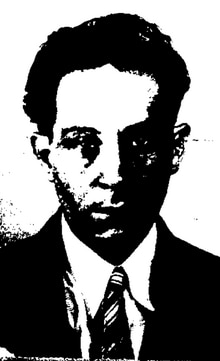 Fard Muhammad