Intro
In 1852, he was born.
In 1880 (May-27), a series of articles commenced in Nur-i-Afshan of Ludhiana, by Rev. GL Thakur Das, titled “Adam Zuroorat-e-Quran” – The Redundancy of the Quran – which asserted that there was no need for the Quranic teachings as the other scriptures, particularly the Bible, were enough for mankind’s guidance at all times. He implied that the Quranic teachings were not compatible for every era.
In 1885 (Apr-2), the Nur-i-Afshan published an article by GL Thakur Das, under the heading “Jawaab Ishtihar Janaab Mirza Ghulam Ahmad Sahib Raees-e-Qadian Gurdaspur” – Response to the announcement of Respected Mirza Ghulam Ahmad Sahib, Chief of Qadian, Gurdaspur. MGA allegedly claimed to have been granted a higher status than other auliya, who came before him, due to his obedience to Muhammad[sa] Sahib, and hence, in his obedience is goodness and harm in opposition (Nur-i-Afshan, 2 April 1885, Vol. 13, No. 14, pp. 107-108).
In 1895 (Dec-20), Thakur Das wrote an article in the Nur-i-Afshan dated 20 December.
In 1893, at age 65 (MGA was 53), Abdullah Athim agreed to have a written debate with MGA and MGA’s team of writers (See Church Missionary Society, CMS, Punjab and Sindh Mission report of 1900, also found herein). Athim famously debated MGA starting on May-22-1893 at the bungalow of Dr. Henry Martyn Clark. Padre Imad ud Din was also there (See page 152). MGA was getting help from Maulvi Muhammad Ahsan Amrohi, Maulvi Nur ud Din of Bhera (See Church Missionary Society, CMS, Punjab and Sindh Mission report of 1900, page 119, also found herein)(See also Dard, page 392)(see Mujadid e Azim, online abridged version, page 462) and “a noted opponent of Christianity from Ludhiana”. Athim had on his team, Rev. G.L. Thakur Dass of the American United Presbyterian Mission at Gujranwala, the Rev. Mr. Abdullah of the American Presbyterian Mission and Reverend Thomas Howell of the Church Missionary Society (at Clarkabad)(See “Holy War”, page 3). It ended on June 5th, which is 15 days later. Dr. Clark wrote about this written debate here. He offers the other side of the story, he notes that MGA didn’t predict any death in 15 months, MGA had asked for a Mubahila, however, a Mubahila had never happened in Islam and thus, the Christians refused. MGA seems to have had another Mubahila as soon as he left the house of Dr. Clark (see the Punjab Mission News). The biggest issue here is that this is mostly a one-sided story, Ahmadi’s are telling the story and thus, it is biased and dubious. Nevertheless, we have went through the facts and explained the story from a neutral perspective. It seems to us that the only reason that MGA allegedly blurted out that Athim would die in 15 months was because Athim and his team had brought into the debate 3 persons who were deaf, dumb and blind. They asked MGA to heal them, MGA blew a gasket, he was upset. This is when MGA yelled out that Athim would die.
In 1896 (Jan), MGA responded to an article by Thakur Das (Majmu‘ah-e-Ishtiharat [2019], Vol. 2, pp. 118-119 and 124, 125 and 127) of Dec-1895 (See the Nur-i-Afshan dated 20 December 1895). Thakur Das responded to MGA a few months later (see February-21, 28, Mar-6, and April-17, p. 9).
In 1903, Reverend Thakur Das published “The Greatest Discovery Exploded“, this was about the Yuz Asaf theory, the tomb at Cashmere (Kashmir)(Published by the American Tract Society, Lodhiana)(the sub-title of the book says that it is against Mirza Ghulam Ahmad). In this article, Thakur Das refers to an article in the Qadiani newspaper Al-Hakam by S. Abdul Rahman. He argues that Yuz Asaf was an honorary title given to this tomb and really referred to the story of Barlaam and Josaphat. He also quoted the famous Ikmal-ud-Din. He goes on to argue that the 12 tribes of Israel never went to India, per the Bible too. Das talks about the shrine of Lady Eleanor in Kashgar (western china). He mentions Nicholas Notovitch and MGA’s medicine, the Marham-e-Isa. He mentions MGA’s death prophecy vs. Dowie and Piggot. He then mentions the debate with Athim and gives a reference to the Nur Afshan of August 17th, 1894.
In 1919, Thakur Das is mentioned in the ROR of Dec.
In 1920, Reverend GL Thakur Das wrote articles against Islam in the Moslem World magazine.
In 1939, Thakur Das is mentioned in the ROR of Dec.
In 1943, Thakur Das is mentioned in the ROR of May.
_____________________________________________________________________________________________
1852
In 1852, he was born.
______________________________________________________________________________________________
1880
https://www.alhakam.org/promised-messiah-opposition-christian-arya-press/
In 1880 (May-27), a series of articles commenced in Nur-i-Afshan of Ludhiana, by Rev. GL Thakur Das, titled “Adam Zuroorat-e-Quran” – The Redundancy of the Quran – which asserted that there was no need for the Quranic teachings as the other scriptures, particularly the Bible, were enough for mankind’s guidance at all times. He implied that the Quranic teachings were not compatible for every era.
_____________________________________________________________________________________________
1885
Hazrat Ahmad’s claim to be the Promised Messiah and opposition from the religious clergy and press | Al Hakam
https://www.alhakam.org/promised-messiah-opposition-christian-arya-press
Nur-i-Afshan, 2 Apr 1885
In 1885 (Apr-2), the Nur-i-Afshan published an article by GL Thakur Das, under the heading “Jawaab Ishtihar Janaab Mirza Ghulam Ahmad Sahib Raees-e-Qadian Gurdaspur” – Response to the announcement of Respected Mirza Ghulam Ahmad Sahib, Chief of Qadian, Gurdaspur. The author wrote:
“The letter and ishtihar about Barahin-e-Ahmadiyya, both in Urdu and English, from respected Mirza Sahib has reached my humble self as well. He has sought a nice method to publicise Barahin-e-Ahmadiyya. Mirza Sahib has made the following claims in those writings:
“Firstly that he has been appointed as the Reformer of this Age, in likeness to the Messiah, so that he could reform the morals of mankind, and that his spiritual attributes are similar to those of Jesus Christ. Moreover, he has been granted a higher status than other auliya, who came before him, due to his obedience to Muhammad[sa] Sahib, and hence, in his obedience is goodness and harm in opposition.
“Secondly, the objective behind his divine appointment is to inform mankind that there is only one religion in accordance with the Will of God, meaning Islam, and Al-Quran is His Word.
“Thirdly, to prove these two promises, he has authored Barahin-e-Ahmadiyya, after having revelation from God Almighty and being appointed by Him, and there is a reward of 10,000 rupees for refuting it.
“Fourthly, anyone who is doubtful about the truthfulness of Islam, may come to Qadian and stay there with him for a year and witness miracles, and come with an intention to accept Islam.” (Nur-i-Afshan, 2 April 1885, Vol. 13, No. 14, pp. 107-108)
He then goes on to object to the arguments presented in Barahin-e-Ahmadiyya and uses foul language against Hazrat Ahmadas. (Ibid.)

_____________________________________________________________________________________________
1891
Nur-i-Afshan, 11 June 1891, pp. 6-7
Hazrat Ahmad’s claim to be the Promised Messiah and opposition from the religious clergy and press | Al Hakam
https://www.alhakam.org/promised-messiah-opposition-christian-arya-press
In 1891 (Jun-11), the Nur-i-Afshan of Ludhiana published an article by GL Thakur Das, titled “Jawaab Ishtihar Mirza Ghulam Ahmad Sahib Qadiani” — Response to the announcement of Mirza Ghulam Ahmad Sahib Qadiani, in which he, as his practice, used foul language and mocked the MGA’s claims and revelations (Nur-i-Afshan, 11 June 1891, pp. 6-7).

______________________________________________________________________________________________
1893
The Holy War — A DEBATE BETWEEN ISLAM & CHRISTIANITY — Jang-e-Muqaddas
https://files.alislam.cloud/pdf/The-Holy-War.pdf
In 1893, at age 65 (MGA was 53), Abdullah Athim agreed to have a written debate with MGA and MGA’s team of writers (See Church Missionary Society, CMS, Punjab and Sindh Mission report of 1900, also found herein). Athim famously debated MGA starting on May-22-1893 at the bungalow of Dr. Henry Martyn Clark. Padre Imad ud Din was also there (See page 152). MGA was getting help from Maulvi Muhammad Ahsan Amrohi, Maulvi Nur ud Din of Bhera (See Church Missionary Society, CMS, Punjab and Sindh Mission report of 1900, page 119, also found herein)(See also Dard, page 392)(see Mujadid e Azim, online abridged version, page 462) and “a noted opponent of Christianity from Ludhiana”. Athim had on his team, Rev. G.L. Thakur Dass of the American United Presbyterian Mission at Gujranwala, the Rev. Mr. Abdullah of the American Presbyterian Mission and Reverend Thomas Howell of the Church Missionary Society (at Clarkabad)(See “Holy War”, page 3). It ended on June 5th, which is 15 days later. Dr. Clark wrote about this written debate here. He offers the other side of the story, he notes that MGA didn’t predict any death in 15 months, MGA had asked for a Mubahila, however, a Mubahila had never happened in Islam and thus, the Christians refused. MGA seems to have had another Mubahila as soon as he left the house of Dr. Clark (see the Punjab Mission News). The biggest issue here is that this is mostly a one-sided story, Ahmadi’s are telling the story and thus, it is biased and dubious. Nevertheless, we have went through the facts and explained the story from a neutral perspective. It seems to us that the only reason that MGA allegedly blurted out that Athim would die in 15 months was because Athim and his team had brought into the debate 3 persons who were deaf, dumb and blind. They asked MGA to heal them, MGA blew a gasket, he was upset. This is when MGA yelled out that Athim would die.
_____________________________________________________________________________________________
1895
Dec-20
Nur-i-Afshan dated 20 December 1895
https://www.alhakam.org/promised-messiah-opposition-christian-arya-press/
In 1895 (Dec-20), Thakur Das wrote an article in the Nur-i-Afshan dated 20 December.
_____________________________________________________________________________________________
1896
Majmu‘ah-e-Ishtiharat [2019], Vol. 2, pp. 118-130
https://www.alhakam.org/promised-messiah-opposition-christian-arya-press/
In 1896 (Jan), MGA responded to an article by Thakur Das (Majmu‘ah-e-Ishtiharat [2019], Vol. 2, pp. 118-119 and 124, 125 and 127) of Dec-1895 (See the Nur-i-Afshan dated 20 December 1895). Thakur Das responded to MGA a few months later (see February-21, 28, Mar-6, and April-17, p. 9).
_____________________________________________________________________________________________
1903
pages 1 to 11
https://ahmadiyyafactcheckblog.com/wp-content/uploads/2019/01/greatest-discovery-exploded-by-the-rev.-g.-l.-thakur-dass.-1902.pdf
In 1903, Reverend Thakur Das published “The Greatest Discovery Exploded“, this was about the Yuz Asaf theory, the tomb at Cashmere (Kashmir)(Published by the American Tract Society, Lodhiana)(the sub-title of the book says that it is against Mirza Ghulam Ahmad). In this article, Thakur Das refers to an article in the Qadiani newspaper Al-Hakam by S. Abdul Rahman. He argues that Yuz Asaf was an honorary title given to this tomb and really referred to the story of Barlaam and Josaphat. He also quoted the famous Ikmal-ud-Din. He goes on to argue that the 12 tribes of Israel never went to India, per the Bible too. Das talks about the shrine of Lady Eleanor in Kashgar (western china). He mentions Nicholas Notovitch and MGA’s medicine, the Marham-e-Isa. He mentions MGA’s death prophecy vs. Dowie and Piggot. He then mentions the debate with Athim and gives a reference to the Nur Afshan of August 17th, 1894.
_____________________________________________________________________________________________
1919
Dec
ROR
Thakur Das is mentioned in the ROR of Dec-1919.
_____________________________________________________________________________________________
1939
Dec
ROR
Thakur Das is mentioned in the ROR of Dec-1939.
_____________________________________________________________________________________________
1943
May
ROR
Thakur Das is mentioned in the ROR of May-1943.
______________________________________________________________________________________________
https://www.alhakam.org/non-resistance-bible-quran-gl-thakur-das
Non-resistance, Bible and Quran: Promised Messiah’s response to Rev GL Thakur Das in 1896
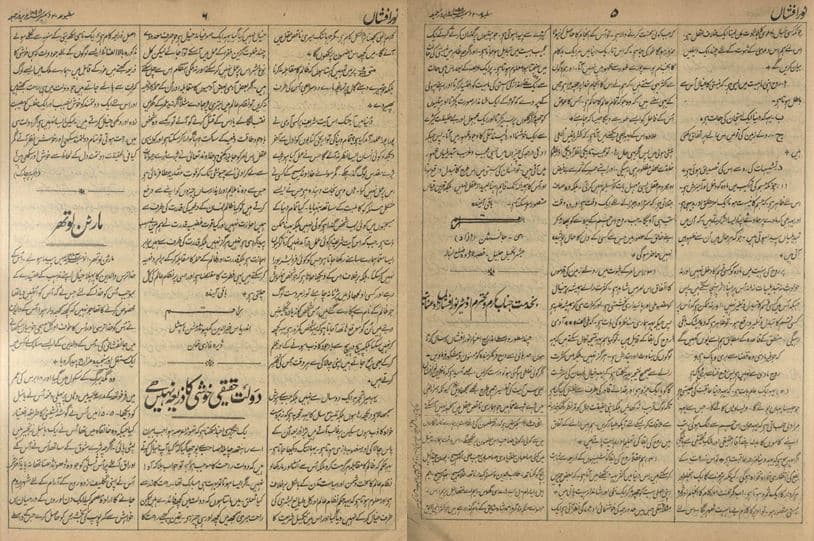
Nur-i-Afshan, 20 December 1895
Ata-ul-Haye Nasir, Ahmadiyya Archive & Research Centre
On 20 December 1895, the Christian newspaper, Nur-i-Afshan of Ludhiana, published a comment from Indar Yas Khairuddin – compounder at the Mission Hospital in Dera Ghazi Khan – in which he requested some elaboration of the following verse of the Gospel:
“But I tell you, do not resist an evil person. If anyone slaps you on the right cheek, turn to them the other cheek also.” (Matthew 5:39)
Question of Indar Yas Khairuddin
Indar Yas Khairuddin of Dera Ghazi Khan presented his question in the following words:
“Has anyone in this world acted upon this blessed verse to the letter? If one ponders over all the history books of the world from start to end, we find no individual who has practised it. There have been many prominent sacred personalities, but no one has practised it except the Lord Jesus. […] Has there been anyone from amongst the Christians of this world? No one. In fact, it is an impossible thing. If no one acts upon this blessed verse, then why is such a complex matter put before us which could not be fulfilled by any human being?
“On the other hand, we see that one who remains silent [upon being oppressed and] does not wish to indulge in any dispute, is faced with greater oppressions from the people who are called the oppressors. They get the opportunity by witnessing that this person is weak and cannot do anything, and due to their tricks, they are able to run away despite being on falsehood and carrying out oppressions. They continue to dishonour them with the help of their cleverness.” (Nur-i-Afshan, 20 December 1895, pp. 5-6)
Response from Rev GL Thakur Das

On 3 January 1896, Nur-i-Afshan published a response from Rev GL Thakur Das, titled “Manshur-e-Masih Shah Salamat”.
GL Thakur Das was one of the three Christian missionaries who were settled upon to assist Deputy Abdullah Athim during the debate between the Promised Messiahas and Abdullah Athim, published as Jang-e-Muqaddas. (The Holy War [Jang-e-Muqaddas], p. 3)
It was a practice of GL Thakur Das to write articles wherein he would attempt to attack the beautiful teachings of Islam, the majesty of the Holy Quran and the blessed character of the Holy Prophetsa. Moreover, the tone of these articles was very harsh and abusive towards Hazrat Mirza Ghulam Ahmadas of Qadian as well.
In his above-stated article, he wrote:
“In the 20 December 1895 issue of Nur-i-Afshan, Brother Indar Yas Khairuddin Sahib seems to be very concerned about this commandment and states that this commandment encourages the continuation of oppression and is antagonist of the system of the universe, and that no one except Jesus could ever act upon this, but rather, it is an impossible thing to practice it. I do not agree at all with this insignificant inference.” (Nur-i-Afshan, 3 January 1896, p. 4)
The author then goes on to refute this statement from Khairuddin and says:
“It has always been deemed commendable to act upon this commandment. Look, it has been commended in a book like Quran as well.” (Ibid.)
He quoted verse 127 of Surah an-Nahl, which states:
وَاِنۡ عَاقَبۡتُمۡ فَعَاقِبُوۡا بِمِثۡلِ مَا عُوۡقِبۡتُمۡ بِہٖ ؕ وَلَئِنۡ صَبَرۡتُمۡ لَہُوَ خَیۡرٌ لِّلصّٰبِرِیۡنَ
(Surah an-Nahl, Ch. 16: V. 127)
Promised Messiah’sas ishtihar in response
In response to the article by Rev GL Thakur Das, the Promised Messiahas issued an ishtihar titled “Do Isaa‘ion mein Muhakamah” – An arbitration between two Christians – and wrote:
“It is stated in Chapter 5 of the Gospel of Matthew, ‘You have heard that it was said, “Eye for eye, and tooth for tooth.” But I tell you, do not resist an evil person. If anyone slaps you on the right cheek, turn to them the other cheek also. [Matthew 5:38-39].’ A Christian individual named Khairuddin has objected to it hesitantly that such commandments are against the natural law of self-protection which is seen in all animals, even in birds and insects as well, and it cannot be proved that any person except Jesus[as] himself has ever followed these commandments. Therefore, this question of his has been published in Nur-i-Afshan dated 20 December 1895. In fact, this question by Khairuddin was a very good and perfect one and a criterion for a less knowledgeable person.
“However, unfortunately, in Nur-i-Afshan’s issue of 3 January 1896, Rev Thakur Das Sahib has given such a weak and absurd answer to this appreciable and valuable question that will surely make a researcher laugh. Hence, I deemed it appropriate to reveal some of the truth of the question and the answer as an arbitration, and to benefit those who are desirous and thirsty for the true facts.
Torah and Gospel
“It should be clear that Rev Thakur Das Sahib emphasises that in the Gospel, the meaning of non-resistance in the situation of the loss of life or finance is that the government should take revenge from the oppressor, not the person himself. In other words, if a wrongdoer seriously harms someone’s life or snatches their property, in such a situation, the Gospel teaches that one ought to litigate through the ruler. Now, one ought to carefully ponder over that the original statement of the Gospel of Matthew which has been interpreted, states that ‘You have heard that it was said, “Eye for eye, and tooth for tooth.” But I tell you, do not resist an evil person.’ Here, the point to ponder is what the meaning of non-resistance is? Is it merely that if a wrongdoer damages one’s eye or pulls out a tooth, they should be punished through the authorities, one ought not to damage their eyes or pull out their teeth? If this is the meaning, then what will be the superiority [of Gospel] over the Torah? This is because the Torah also gives the same guidance that the wrongdoers should be punished through the judges. In Chapter 21 of Exodus, God addresses Mosesas:
“‘[But if there is serious injury,] you are to take life for life, eye for eye, tooth for tooth. [Exodus 21:23-24]’
“And the Torah is telling that all these punishments should be carried out according to the suggestion of the judges. However, Rev Thakur Das Sahib says that the superiority of the teaching of the Gospel over the teaching of the Torah is that an oppressed person ought to take revenge through the authorities. That is, the Jews had the right to punish the oppressor themselves without the intervention of the authorities, but the Gospel did not declare anyone except judges and rulers to be authorised to punish. As if it is the Gospel that has proposed the positions of judges, and there is no mention of it in the Torah. But it is obvious that such an idea is a clear contradiction to the facts and the priest has not presented any verse of the Torah that implies that the Torah gives everyone the authority to punish. Rather, it is known to every reader of the Torah that all the punishments and limitations of the Torah were implemented through the judges, and there was provision in the Torah for the punishment of crimes that every criminal should be punished by the judges.” (Majmu‘ah-e-Ishtiharat [2019], Vol. 2, pp. 118-119)
An insightful commentary of a Quranic verse

The Promised Messiahas further elaborated on this point and after giving a strong refutation to the arguments of Rev GL Thakur Das, Huzooras stated:
“Further, when Rev Thakur Das Sahib realised that the one-sided teaching of the Gospel is in fact strongly opposed by reason and the law of nature, then just like a drowning person, he reached out to the Holy Quran to find some support. Therefore, he states that even in a book like the Quran, this commandment of the Gospel has been praised, and then presented an incorrect meaning of a verse that ‘if you take revenge then do so to the extent to which you have been wronged; but if you show patience, then, it is best for those who are patient. [Surah an-Nahl, Ch. 16: V. 127]’
“From this verse, he desires to draw a conclusion that it is as if this teaching aligns with the one of the Gospel. However, this is partly his mistake and partly mischief. The mistake is because these people are simply ignorant and unaware of Arabic knowledge. Therefore, they have no ability to understand the true meaning of the Quranic words and the mischief in the sense that the verse categorically says that it does not emphasise only one aspect of toleration and forgiveness, like the Gospel, but rather, retaliation has been presented as a commandment. Moreover, the word is صبر, instead of عفو. […] But still, Rev Thakur Das Sahib has deliberately turned his eyes away and wanted to equate the perfect teaching of the Holy Quran with the imperfect and lacking teaching of the Gospel.” (Ibid., p. 123)
In the footnote, Huzooras wrote:
“The statement that ‘in a book like Quran as well’ is a derogatory statement that has been used by the Padre Sahib about the Holy and Sacred Book of God Almighty. I am very astonished as to why this dead-worshipping nation holds so much grudge against the Pure Word of Allah, the Sublime.” (Ibid., footnote)
Huzooras continued:
“The readers must note that the verse of the Holy Quran which has been incorrectly interpreted by Thakur Das Sahib, is as follows:
وَاِنۡ عَاقَبۡتُمۡ فَعَاقِبُوۡا بِمِثۡلِ مَا عُوۡقِبۡتُمۡ بِہٖ ؕ وَلَئِنۡ صَبَرۡتُمۡ لَہُوَ خَیۡرٌ لِّلصّٰبِرِیۡنَ
“That is, ‘And if you punish [the oppressors], in return for their oppressions, then do so to the extent to which you have been wronged; but if you show patience, then, surely, that is best for those who show haste in punishing, cross all limits and misbehave – meaning those who are unable to identify the appropriateness and suitability. The word صبر in لِّلصّٰبِرِیۡنَ means ‘to punish without any investigation and on an inappropriate moment’, for this reason, God Almighty did not state لَھُوَ خَیْرٌ لَّکُمْ [Surely it is best for you], but rather, stated لَہُوَ خَیۡرٌ لِّلصّٰبِرِیۡنَ, to indicate that the meaning of صبر at this place is not the same as the one used earlier [in صَبَرۡتُمۡ]. And if the meaning were the same, then instead of لَکُمْ, the word لِّلصّٰبِرِیۡنَ would have seemed meaningless and against eloquence. In the Arabic lexicon, while صبر means to control something, it also means to act with extreme haste, misbehave and act without any investigation.” (Majmu‘ah-e-Ishtiharat [2019], Vol. 2, p. 124)

Among many other Arabic dictionaries, this meaning of the word صبر is mentioned in Lisan-ul-Arab as well. It states that it means الجراءۃ as well. (Lisan-ul-Arab, Vol. 4, Qom, Iran, p. 439)
Hence, when we look at the meanings of الجراءۃ and جرأۃ in Lane’s Arabic-English Lexicon, it states that it means to be bold, daring, brave, or courageous; so as to attempt or venture upon a thing without consideration or hesitation. Lane has also stated, “And صَبْرٌ signifies also The being bold or daring [in enduring, or attempting, a thing].” (An Arabic-English Lexicon, Edward William Lane, 1863, pp. 402 and 1644)

Huzooras continued:
“Now, the readers ought to ponder that this verse only means that every believer has been made incumbent to retaliate to the extent to which they have been wronged, but if they show patience, meaning they refrain from hastily punishing [the oppressor], then in this case, patience is better for those who are accustomed to show hurriedness and hast and commit unsuitable acts. Meaning that those who do not punish [the oppressor] at an appropriate moment, instead, retaliate even against such people who, if shown benevolence [ihsan], would have reformed, or they are so quick in punishing that they inflict hardship upon an innocent person, instead of carrying out a thorough investigation and interrogation. Such people are required to show patience, that is, to refrain from hastily moving towards punishment. Firstly, one ought to carry out enough investigation and research and ponder thoroughly as to whether or not it is a suitable moment for punishment. Then, if it is a suitable moment, then they ought to do so, otherwise, stay behind. Moreover, this subject is not stated in this verse alone, but rather, it has been stated in various other verses of the Holy Quran as well. Hence, Allah the Sublime states in one instance:
وَجَزٰٓؤُا سَیِّئَۃٍ سَیِّئَۃٌ مِّثۡلُہَا ۚ فَمَنۡ عَفَا وَاَصۡلَحَ فَاَجۡرُہٗ عَلَی اللّٰہِ
“‘And the recompense of an injury is an injury the like thereof; but whoso forgives and the forgiveness of such nature that aims at bringing about an improvement, his reward is with God.’ (Surah ash-Shura, Ch.42: V.41)
“In other words, the forgiveness ought not to be at an unsuitable and inappropriate moment which might produce a bad result and initiate a disorder, but rather, the forgiveness should be at an instance which may result in a reform. This indicates that the natures of all human beings are not the same and the abilities and habits of the sinners are not of the same nature, but rather, some of them deserve punishment and their reformation is impossible without punishment, while the others benefit from the forgiveness and toleration, and upon being punished, they continue their wrongdoings with even more fervour. Thus, this teaching of assessing the situation and time is found in various places in the Holy Quran. If I elaborate on those [teachings], it would make a massive magazine.
Mount Paran
“It is important to remember that, as it has been stated in the Torah that ‘The Lord came from Sinai and dawned over them from Seir; he shone forth from Mount Paran. [Deuteronomy 33:2]’, therefore, the true shine of each teaching has emerged from Islam. It is Quran that has made [mankind] perfectly acquainted with the Act and the Word of God. The Torah had emphasised punishments, and since the Gospel came when the habits of revenge, grudge and prejudice had exceeded all bounds amongst the Jews, for this reason, it taught about forgiveness and tolerance. However, this teaching in itself was not the perfect one, but rather, antagonistic to the Divine System. Hence, a seeker of the perfect teaching would have huge doubts about the teaching of the Gospel, and possibly declare such a teacher to be less knowledgeable and simple-natured.” (Majmu‘ah-e-Ishtiharat [2019], Vol. 2, pp. 124-125)
In regards to Paran, Huzooras stated:
“فاران is an Arabic word that means ‘two fugitives’ and its verbal noun is فرار. Since Hazrat Ismaelas and his righteous and truthful mother Hajrara migrated to the land of Mecca Muazzimah in light of the divine revelation due to the exceeding wrongdoings of Sarah, for this reason, this land was called فاران, meaning two fugitives.” (Ibid., p. 125 [footnote])
Imperfect teaching of the Gospel
The Promised Messiahas further said:
“The Messiah[as] himself acknowledges the imperfectness and flaws of his teaching, and tells his companions:
“‘All this I have spoken while still with you. But the Advocate, the Holy Spirit, whom the Father will send in my name, will teach you all things.’ (John, 14:25-26)
“This indicates the fact that ‘My teaching is flawed and imperfect and the upcoming prophet will bring a perfect teaching.’ […] If the Christians had any justice in them, the Messiah’s acknowledgement of his own teaching being flawed and the hope for the upcoming prophet was a sufficient method for them to identify our Master, Khatamul Anbiyaa, may peace and blessings of Allah be upon him, particularly in a situation when the Gospel’s flawed teaching required a perfect Book.” (Majmu‘ah-e-Ishtiharat [2019], Vol. 2, p. 127)
Rev Thakur Das’ response and Khairuddin’s clarification

On 21 and 28 February, and 6 March 1896, the Nur-i-Afshan published articles by Rev GL Thakur Das, wherein he attempted to refute the arguments presented by the Promised Messiah in his above-stated ishtihar. However, it is our firm belief that the arguments presented by Hazrat Ahmad, in favour of Islam’s magnificence, are undoubtedly irrefutable.
Due to his objections over the Biblical verse, Khairuddin was being labelled as an admirer of Hazrat Ahmad’sas teachings and had to face opposition from his Christian brethren, so much so that he had to announce in Nur-i-Afshan, in an article dated 17 April 1896, that it was his mistake to doubt the Gospel’s teaching. He expressed:
“I am aware that some of the Christian brethren presume that I adore the teaching of Mirza Sahib. I am very astonished upon hearing this. Now, I put this matter to God Almighty that the Lord Father will Himself decide about this contention, since he knows the inner feelings and hidden thoughts.” (Nur-i-Afshan, 17 April 1896, p. 9)
Conclusion
This whole episode is another testament to the fact that the Promised Messiahas was always at the forefront of defending Islam and its magnificent teachings. He would always highlight the fact that it is only Islam that presents a teaching which is compatible for all eras and the Holy Quran’s perfect teachings are the only solution to all problems of this world, particularly the establishment of a peaceful and just society.
_____________________________________________________________________________________________
https://www.alhakam.org/promised-messiah-opposition-christian-arya-press/
Hazrat Ahmad’s claim to be the Promised Messiah and opposition from the religious clergy and press
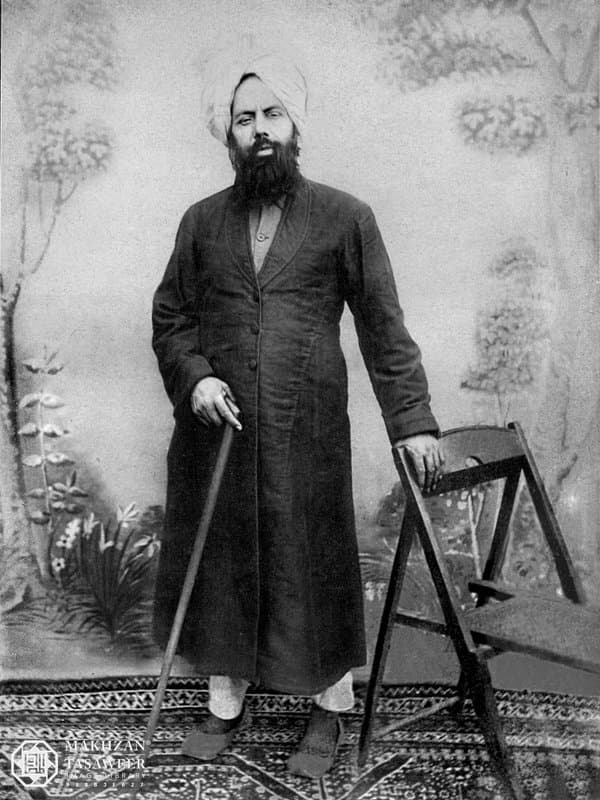
Ata-ul-Haye Nasir, Ahmadiyya Archive & Research Centre
During the late 19th century, Islam was being attacked from all sides. In British India, the Christian missionaries and the Arya Samajists were maligning the beautiful teachings of the Holy Quran and the blessed character of the Holy Prophet Muhammadsa. They were publishing book after book, and their periodicals were also contributing to their anti-Islam efforts.
At that juncture, Hazrat Mirza Ghulam Ahmadas of Qadian came into the field as a defender of Islam. He had debates with the Christian missionaries in Sialkot while he was employed there in the 1860s. He wrote articles for various Indian newspapers, such as Manshur-e-Muhammadi of Bangalore, which have been compiled in the second volume of Ruhani Khazain.
The likes of Sir Syed Ahmed Khan were making efforts to find ways of proving that Islam was compatible with Western thought, especially with science and philosophy. Such was the atmosphere of Islam within British India when Hazrat Ahmadas wrote Barahin-e-Ahmadiyya, the first two parts being published in 1880. He published an announcement in May 1879, wherein he told the world about the objectives of this book and gave a challenge with a reward of 10,000 rupees to be given to anyone who could refute the arguments presented in this book in favour of Islam, or even if they succeed in presenting one-fifth of his arguments to prove their respective scripture to be truthful.
Hazrat Ahmadas said that the reason behind this book was that Pandit Dayanand, founder of the Arya Samaj, had disrespected the Holy Prophet Muhammadsa, Mosesas and Jesusas, and declared the Holy Quran and Bible to be untruthful. (Majmu‘ah-e-Ishtiharat [2019], Vol. 1, pp. 19-20)
Christian attacks on the Holy Quran and Prophet Muhammadsa
On 27 May 1880, a series of articles commenced in Nur-i-Afshan of Ludhiana, by Rev. GL Thakur Das, titled “Adam Zuroorat-e-Quran” – The Redundancy of the Quran – which asserted that there was no need for the Quranic teachings as the other scriptures, particularly the Bible, were enough for mankind’s guidance at all times. He implied that the Quranic teachings were not compatible for every era.

Moreover, another series of articles was published by the same newspaper, titled “Wasiyyat-Nama Hazrat Muhammad Sahib” – The Will of Hazrat Muhammad Sahib (referring to the Hadith-e-Qirtas) in which the author asserted that the teaching brought by the Holy Prophet Muhammadsa was not perfect. He wrote on 9 February 1882 that, God forbid, the Holy Prophetsa was doubtful about the Holy Quran being the Word of God and said that he did not manifest any sign and miracle in reality. The author gave the example of the splitting of the moon.

Those who oppose Hazrat Ahmadas, ought to answer one simple question; while there were attacks on Islam, the Holy Quran and particularly the Holy Prophet Muhammadsa, and the Muslims seemed to be helpless in truly refuting those objections, was there not any need for a divinely guided personage who could help the cause of Islam?
The circumstances of that time and the interest of the followers of all religions in the coming of a Messiah or reformer testify to the need for a heavenly-guided personage.
Hazrat Ahmad’sas claim to be appointed by God

In 1882, Hazrat Ahmadas published the third part of Barahin-e-Ahmadiyya, in which he mentioned various revelations received in March 1882 — the time when he was writing the Sub-Footnote Number One — including:
يَا أَحْمَدُ بَارَكَ اللهُ فِيْكَ، مَا رَمَيْتَ إِذْ رَمَيْتَ وَلكِنَّ اللهَ رَمَى، الرَّحْمنُ عَلَّمَ الْقُرْآنَ، لِتُنْذِرَ قَوْمًا مَّا أُنْذِرَ آبَاؤُهُمْ، وَلِتَسْتَبِيْنَ سَبِيْلُ الْمُجْرِمِينَ. قُلْ إِنِّي أُمِرْتُ وَأَنَا أَوَّلُ الْمُؤْمِنِيْنَ۔۔۔۔كُلُّ بَرَكَةٍ مِّنْ مُحَمَّدٍ صلى الله عليه وسلم۔۔۔۔ھُوَ الَّذِیۡۤ اَرۡسَلَ رَسُوۡلَہٗ بِالۡہُدٰی وَدِیۡنِ الۡحَقِّ لِیُظۡہِرَہٗ عَلَی الدِّیۡنِ کُلِّہٖ
“Allah has placed blessing in you, O Ahmad. Whatever you did let loose, it was not you but it was Allah who let it loose. Allah has taught you the Quran so that you should warn the people whose ancestors have not been warned, and that the way of the guilty ones might become manifest. Say: ‘I have been commissioned and I am the first of the believers.’ […] Every blessing is from Muhammad, peace and blessings of Allah be upon him. […] Allah is the God who has sent His Messenger and His Appointed One with guidance and the True Faith so that he should make this faith prevail over all diverse faiths.” (Barahin-e-Ahmadiyya [English], Part III, pp. 207-209)
Edicts from Muslim clerics of Ludhiana and Amritsar

Maulvi Muhammad Hussain Batalwi, in his review of Barahin-e-Ahmadiyya, mentioned the edicts of kufr which were issued by some Muslim clerics in relation to the revelations mentioned by Hazrat Ahmadas, and wrote:
“Some Muslims of Amritsar declare these revelations to be unauthentic, impossible and unacceptable, and the others from Ludhiana declare it categorical kufr [infidelity]. The reason presented by the first party (Amritsari Muslims) is that the divine revelation (which is equivalent to wahi) cannot be – and has not been till this day – received by anyone except Prophets. […] Whereas the reason presented by the second party (Muslims of Ludhiana) behind their edict of kufr is that the author has claimed to be a prophet in these revelations.” (Ishaat-us-Sunnah, Vol. 7, No. 6, pp. 171-172)
Second Coming of the Messiah: Physical or Spiritual?

It is interesting to mention here that the Christian newspaper Nur-i-Afshan of Ludhiana published an article and mentioned that there are some who say that the second coming of the Messiah will be spiritual, not physical. The article then goes on to present the opposite perspective. (Nur-i-Afshan, 12 October 1882, Vol. 10, No. 41, pp. 323-324)
Conclusion of the 13th century after Hijrah
When the 13th century after Hijrah was concluding, the press particularly mentioned its significance for the Muslims.
In 1882, The Evening Standard of London wrote:
“We are on the eve of a critical period for the Islamic world. Next November will close the thirteenth century of the Hegira, when, according to the promise of the Prophet, a time of revival and regeneration is to dawn. ‘At the end of every hundred years,’ so runs the Hadith, or sacred word dictated by Mahomet himself, ‘God will send a man to restore to the Mussulman world the splendour of its religion.’” (The Evening Standard, 29 August 1882, p. 5)

Another newspaper stated:
“Of no small interest at the present crisis is the succeeding article on ‘The Coming of the Mahdy’—the Mahometan Messiah, to whose advent pious Moslems look forward to inaugurate the ultimate triumph of their creed.” (Taunton Courier and Western Advertiser, 6 September 1882, p. 3)

The Madras Weekly Mail also expressed its views on this subject and wrote:
“As the Jews long for the advent of the Messiah, so have the Mahomedans looked forward to the coming of El Mehdi, the last of their series of prophets.” (The Madras Weekly Mail, 18 October 1882, p. 29)

An Irish newspaper wrote:
“Mussulman prophets generally agree that the 1,300 of the Hegira will be marked by events of the utmost importance to Islam. This year begins on the 12th November, and orthodox Mahommedans will be on the lookout for portents of all kinds.” (The People’s Advocate and Monaghan, Fermanagh, and Tyrone News, 18 November 1882, p. 2)

Furthermore, the Nur-i-Afshan published an article, titled “Terahwin Sadi ka Ikhtitaam aur Maujooda Islam” – Conclusion of the 13th century and contemporary Islam.
The article stated that it was a very important day in Islam; the 13th century had concluded according to the Muslim lunar calendar. The next day would be the first of Muharram and the 14th century would commence.

The article stated that the Muslims were awaiting the conclusion of this era and had many hopes for the upcoming one. It mentioned that the Muslims also believed that after the conclusion of this era, a messenger and Mahdi would appear, purify Islam and defeat Christianity.
The article said that the Muslims, however, turned their attention towards certain temporal hopes and aspirations and it was as if they had forgotten the hopes regarding the 14th century. (Nur-i-Afshan, 20 December 1883, Vol. 11, No. 51, pp. 403-404)
Hazrat Ahmad’sas claim to be the Mathil-e-Masih

In Barahin-e-Ahmadiyya, Hazrat Ahmadas mentioned the second coming of the Messiah and said:
“But it has been revealed to my humble self that on account of my meekness, humility, trust in God, sincerity and the Signs and [heavenly] light, I resemble the Masih in his previous life; and that the nature of this humble one and the nature of the Masih greatly resemble each other, as if they are two pieces of the same jewel or two fruits of the same tree. The harmony between us is of such a great extent that there is very little that the spiritual eye can distinguish between us. […]
“Since my humble self has a complete resemblance with Hadrat Masih, the Benevolent God has from the beginning included this humble one in His prophecy about the Messiah. That is, Hadrat Masih is the overt and physical manifestation of the above-mentioned prophecy, and this humble one is the spiritual and rational application; meaning that, the spiritual supremacy of the religion of Islam which depends upon irrefutable proofs and manifestly valid arguments would be, as is destined by God, brought about by this humble one either in my lifetime or after my death.” (Barahin-e-Ahmadiyya [English], Part IV, pp. 374-375)
In 1891, after being revealed by God Almighty, Huzooras announced that he is the Promised Messiah who was prophesied to come in the Latter Days. Its details will be narrated later in the article.
Hazrat Ahmad’sas challenge in 1885 and response from religious clergy
In March 1885, Hazrat Ahmadas published an ishtihar and sent 8000 copies of registered letters in Urdu and English to the religious leaders, scholars and leaders of Asia, Europe and America, informing them of his claims and inviting them to come and witness the truthfulness of Islam at Qadian. (Majmu‘ah-e-Ishtiharat [2019], Vol. 1, pp. 30-32; Maktubat-e-Ahmad [2019], Vol. 1, pp. 51-53)
Response from Rev. Imad-ud-Din
On 19 March 1885, a Christian newspaper, Nur-i-Afshan of Ludhiana, published an article by a Christian missionary Imad-ud-Din, under the heading “Jawaab Ishtihar Maulvi Ghulam Ahmad Sahib Raees-e-Qadian Zila Gurdaspur” – Response to the announcement of Maulvi Ghulam Ahmad Sahib, Chief of Qadian, District Gurdaspur – in which he stated:

“The said Maulvi Sahib has sent that registered ishtihar to me as well. I am publishing its short response in Nur-i-Afshan so that all people may be aware of my response. The gist of that ishtihar is that the religion of Islam and Quran is from God. If anyone has any doubt about this, they ought to come to the Maulvi Sahib and stay for a year, during which he would manifest some miracles testifying to the truthfulness of Islam. In case of witnessing it, the visitor would become a Muslim, otherwise, leave after receiving a settled amount of money. And that God has informed him that the people who would not pay heed to the Truth after receiving the letter would be guilty, dumbfounded and defeated. He published this ishtihar in Urdu and English and sent it to the missionaries in both India and England. My response is that we are not only undoubtful about the truthfulness or untruthfulness of Islam, but also have a firm belief that Islam and the Quran are not from God at all. We are claimants of its untruthfulness, instead of having any doubt about it, as to come to you to alleviate it.” (Nur-i-Afshan, 19 March 1885, Vol. 13, No. 12, p. 95)
He further mentioned Barahin-e-Ahmadiyya and said that it had nothing which needed to be pondered over. He then mocked Hazrat Ahmadas and his claims, as is the practice of opponents of all Appointees of Allah the Almighty, and used foul language as well. (Ibid.)
Response from Rev. GL Thakur Das
Then, on 2 April 1885, the same newspaper published an article by another missionary, GL Thakur Das, under the heading “Jawaab Ishtihar Janaab Mirza Ghulam Ahmad Sahib Raees-e-Qadian Gurdaspur” – Response to the announcement of Respected Mirza Ghulam Ahmad Sahib, Chief of Qadian, Gurdaspur. The author wrote:

“The letter and ishtihar about Barahin-e-Ahmadiyya, both in Urdu and English, from respected Mirza Sahib has reached my humble self as well. He has sought a nice method to publicise Barahin-e-Ahmadiyya. Mirza Sahib has made the following claims in those writings:
“Firstly that he has been appointed as the Reformer of this Age, in likeness to the Messiah, so that he could reform the morals of mankind, and that his spiritual attributes are similar to those of Jesus Christ. Moreover, he has been granted a higher status than other auliya, who came before him, due to his obedience to Muhammad[sa] Sahib, and hence, in his obedience is goodness and harm in opposition.
“Secondly, the objective behind his divine appointment is to inform mankind that there is only one religion in accordance with the Will of God, meaning Islam, and Al-Quran is His Word.
“Thirdly, to prove these two promises, he has authored Barahin-e-Ahmadiyya, after having revelation from God Almighty and being appointed by Him, and there is a reward of 10,000 rupees for refuting it.
“Fourthly, anyone who is doubtful about the truthfulness of Islam, may come to Qadian and stay there with him for a year and witness miracles, and come with an intention to accept Islam.” (Nur-i-Afshan, 2 April 1885, Vol. 13, No. 14, pp. 107-108)
He then goes on to object to the arguments presented in Barahin-e-Ahmadiyya and uses foul language against Hazrat Ahmadas. (Ibid.)
Response from Rev. Abdullah Athim
On 16 April 1885, the same newspaper published a letter from Abdullah Athim, under the heading “Aik Zuroori Khat” – An important letter – in which he wrote:

“Mirza Ghulam Ahmad Sahib, Chief of Qadian, has claimed to manifest his signs under the banner of Islam, provided one ponders over him [i.e., his claims] with the condition of accepting Islam [upon witnessing the truth], and about this he has published announcements in Urdu and English and sent far and wide. And he has also cautioned that anyone who would not accept this challenge of Mirza Sahib, would be defeated. Now, I wish that you also publish whatever has ‘settled’ between me and Mirza Sahib, I will be thankful to you.” (Ibid., No. 16, p. 124)
He then elaborated on the said ‘settlement’ and stated that Mirza Sahib has ‘agreed’ for him to present three objections to the teachings of the Holy Quran, and said that if Mirza Sahib refutes all these objections and manifest a sign, he would accept the Holy Quran to be the Word of God.
He further wrote:
“I firmly believe that the claim of Mirza Sahib about manifesting a sign is in fact based merely on a hidden strategy and is not truthful. Moreover, I cannot acknowledge a faith which is miracle-seeking or based on a certain criterion to be a [true] faith, by compromising my principles. And Mirza Sahib does not agree to manifest a sign unconditionally, thus, I would wait for myself to be defeated if he does not fulfil my conditions, since, at last, I will surely overcome him.” (Ibid., pp. 124-125)
In later years, it was clear as to who stood victorious and who got defeated. There is not much space to narrate all those details here, however, the historical facts speak for themselves.
Another point that must be noted here is that, firstly, he did not agree with the method proposed by Hazrat Ahmadas in seeking the truth, and secondly, the objections raised by Athim against the Holy Quran have been dealt with and refuted by Hazrat Ahmadas in his multiple books written in the later years, and obviously in his early work Barahin-e-Ahmadiyya as well. He has always highlighted the magnificence and perfection of the Holy Quran.
The editor wrote a note at the end that they have published the responses from the above-mentioned three Christian missionaries and are receiving many more as well. However, he appealed that no more letters be sent, as he asserted, that Mirza Sahib was publicising his book through these announcements. (Ibid., p. 125)

These Christian missionaries did not truly accept the challenge posed by Hazrat Ahmadas and refrained from seeking the truth in accordance with the method suggested by Hazrat Ahmadas. Though a few clergymen, like Indarman Moradabadi and Pandit Lekhram, initially showed a willingness to accept the challenge, the later incidents exposed their real intentions.
For more details on this whole episode, see Tarikh-e-Ahmadiyyat, Vol. 1, pp. 253-264, and Chapter 8 of Life of Ahmadas.
Charles Bradlaugh
Mentioning this challenge, The Toronto Daily Mail reported on 5 June 1885, under the heading “To Convert Bradlaugh”:
“Mr Charles Bradlaugh, the famous infidel, who is always elected as a member of Parliament for Northampton, and always rejected by the House, has now an opportunity of getting converted, and of making handsome wages during the process. The offer comes from Prince Mirza Gholam Ahmed, C.I.E., an Indian potentate of fabulous wealth, and a Mohammedan of great proselytising zeal. The Prince has read Mr Bradlaugh’s works sympathetically, and believes that with a proper course of teaching by Moslem sages, he would become a bright and shining light of Islamism. The Prince proposes, therefore, that Mr Bradlaugh shall come to the former’s domains in the Punjab, and shall put himself under tuition with a view to his conversion. The Prince agrees to furnish the neophyte with a suitable palace and a retinue of servants, to provide for all his household expenditures, which shall be on a scale of magnificence consistent with the honour due to a Prince’s guest, and to furnish him an allowance of 200 rupees per month during the entire process of conversion. Mr Bradlaugh is said to be seriously considering the invitation, although he says that the task of getting converted would probably be a life-long job.”

In 1886, Hazrat Ahmadas once again invited the religious clergy, including Lekhram, Athim, Imad-ud-Din, Thakur Das, and Jeevan Das, and wrote that instead of one year, they should stay at Qadian for 40 days to witness a sign in favour of Islam, and in case no such sign is manifested, they would be rewarded 500 rupees. (Surma-e-Chasham-e-Arya, Ruhani Khazain, Vol. 2, pp. 309-310)
Establishment of Ahmadiyyat
In 1889, when Hazrat Ahmadas established the Ahmadiyya Muslim Jamaat and then claimed to be the Promised Messiah, it was as if the whole world had begun to oppose him. The Muslim clerics as well, instead of joining his efforts in the service of Islam, turned into staunch enemies. The foremost among all those opposing clerics were Maulvi Nazeer Hussain of Delhi and Maulvi Muhammad Hussain of Batala.
An article by Nizam-ul-Mulk of Moradabad, 1891

When the Promised Messiahas published his book Fath-e-Islam (The Victory of Islam), the Nizam-ul-Mulk of Moradabad published an article on 31 December 1890, about which the Indian Newspaper Reports stated under the heading “Mirza Ghulam Ahmad, Kadian, Gurdaspur, Punjab”:
“The Nizamu-l-Mulk (Moradabad), of the 31st December, received on the 10th January, refers to an Urdu pamphlet, called the Fatah-i-Islam, i.e., the victory or triumph of the Muhammadan religion, which has been written by one Mirza Ghulam Ahmad[as], Kadian, Gurdaspur district, Punjab. The Nizamu-l-Mulk republishes from the pamphlet the preface in which the author complains of the alleged spread of heresies and vices among the Musalmans, and of the alleged insults offered and injuries done to the Muhammadan religion by the Christians, particularly referring to the alleged performance of the drama called Mahomet. The Mirza represents himself to be a prophet and declares that he has been sent by God to save the Muhammadan religion from the attacks of Christians, to remove the vices which prevail among the Musalmans, and to again raise Islam to the high position which it once occupied. He will have no occasion to use arms, but will carry out his mission with the aid of the pen and his tongue.” (Selections from the Vernacular Newspapers Published in the North-Western Provinces, Oudh, Central Provinces and Rajputana, 1891, No. 2, pp. 27-28)

This article was then mentioned by the Akhbar-i-’Am of 19 January 1891 as well. The Nur-i-Afshan of 29 January 1891 mentioned the article of Akhbar-i-’Am and used inappropriate comments:
“Akhbar-i-’Am of 19 January narrates that ‘Mirza Ghulam Ahmad Qadiani is a strange man. According to a newspaper of Moradabad, he claims to be the Promised Messiah. He also says that its preaching to the whole world is incumbent upon him. He has written this in a book, which he has authored and published, entitled Fath-e-Islam. We call the attention of the Nur-i-Afshan newspaper to deal with Mirza Sahib.’” (Nur-i-Afshan, 29 January 1891, p. 2)

The Nur-i-Afshan went on to use inappropriate language against the Promised Messiahas and said that according to the Gospels, his claim is false. (Ibid.)
Hazrat Ahmad’sas claim to be the Promised Messiah
On 26 March 1891, Hazrat Ahmadas published an announcement, titled “Zuroori Ishtihar” — An important announcement, and wrote that God Almighty revealed to him the reality of the coming of the Masih Ibn Maryam about which he had briefly mentioned in earlier works such as Fath-e-Islam and Taudih-e-Maram and with much details in Izala-e-Auham as well. Huzooras further said:
“I declare it aloud that God Almighty has revealed the truth upon me through His revelation and inspiration, and the truth which He has opened to me is that, in reality, Masihas Ibn Maryam has passed away and his soul is in the second heaven along with his cousin Yahyaas. I am the spiritual Messiah who was to come in this era whose glad tiding is present in the authentic ahadith.” (Majmu‘ah-e-Ishtiharat [2019], Vol. 1, pp. 221-222)
In Izala-e-Auham, Huzooras mentioned that his claim to be the Mathil-e-Mau‘ud was not a new one, as he had already mentioned it in Barahin-e-Ahmadiyya. Huzooras also mentioned some of his Arabic revelations, which were published in the third part of Barahin-e-Ahmadiyya, and said:
“Yes, in Barahin, it was not stated – on the basis of any revelation – as to what is the reality of the coming of Hazrat Masih Ibn Maryam, which people were awaiting. That is, whether the same [Messiah] would really descend from the heaven onto the earth while placing his hands on the shoulders of angels. But rather, whatever I have written in Barahin in regards to the second coming of Masih Ibn Maryam to this world, is with respect to a well-established belief towards which our Muslim brethren are inclined these days. So, with respect to this apparent belief, I had written in Barahin that I am only the Mathil-e-Maud. […]
“Those who receive revelations from God Almighty do not speak without being permitted, do not understand until they are granted understanding, do not make any claim without His command, and cannot show any boldness on their own. […] So in accordance with this, no debate was initiated on my own in Barahin in relation to Masihas Ibn Maryam. Now that God Almighty has revealed to me the reality of this matter, it is essential for me to publicly announce it. […]
“Moreover, I have so many certain and absolute proofs in regards to the death of Masih Ibn Maryam that there is not enough space in this short booklet to narrate their details. Firstly, you ought to ponder over the Holy Quran and see with open eyes how clearly and categorically it is telling us about the death of Jesus Son of Mary.” (Izala-e-Auham, Ruhani Khazain, Vol. 3, pp. 192-224)

An invitation to the Christian clergy and their response
On 20 May 1891, the Promised Messiahas published an ishtihar titled “Ishtihar Ba-Muqaabil Paadri Sahibaan” — An announcement regarding the Christian missionaries, at the beginning of which he mentioned verse 83 of Surah al-Maidah, verse 20 of Surah Muhammad, and verses 21 and 22 of Surah an-Nahl, and wrote:
“In these above-stated verses, God Almighty has declared the death of Hazrat Masih Ibn Maryam and all those people who were falsely and unrightfully believed to be worshipable. In reality, this argument alone is far stronger than millions of arguments in order to nullify those who worship the creation, as in the holy personages and people who they made ‘god’, have passed away, and now they are dead, not alive. If they were God, they would not have died. […]
“All Christians unanimously agree that if anyone could prove that after death, Masih Ibn Maryam remained dead, they would instantly leave the religion of Christianity, but alas, our clerics of the past did not pay heed to this point against Christians, whereas, this one debate alone would have ceased all debates. […]
“Unfortunately, the Muslims and Christians have made a notion, contrary to the Word of Allah, that the Messiah has been alive in heaven for a long time. Undoubtedly, if this pillar is broken, as a result of the eradication of this false notion, the face of the world would instantly be purified from the worship of creation, and all of Europe, Asia and America would join the same religion of Tawhid and live amicably. However, I have thoroughly tested the Muslim maulvis of the present time, they are furious upon the breakage of this pillar and are in fact supporting the worship of creation. I informed them of the commandment of God Almighty, but they did not accept it. Now I take this invitation, with the aim of presenting this pure gift and addressing the Christians. […]
“What else is the dispute with these people, except the fact that the Messiah is not alive? If this one-minute point is settled, these people would join us like brothers, and there would be Islam everywhere in Europe and Asia. Hence, I am sending this gift of ishtihar to the Christian missionaries, with great respect and humbleness, that God Almighty has revealed to me that Hazrat Masihas Ibn Maryam has died forever, and I have so many proofs that a just person would have no option other than to accept it.” (Majmu‘ah-e-Ishtiharat [2019], Vol. 1, pp. 240-242)
Response from GL Thakur Das

On 11 June 1891, Nur-i-Afshan of Ludhiana published an article by GL Thakur Das, titled “Jawaab Ishtihar Mirza Ghulam Ahmad Sahib Qadiani” — Response to the announcement of Mirza Ghulam Ahmad Sahib Qadiani, in which he, as his practice, used foul language and mocked the Promised Messiah’sas claims and revelations. (Nur-i-Afshan, 11 June 1891, pp. 6-7)
An article by Safir-e-Deccan quoted in Nur-i-Afshan
On 25 June 1891, the Nur-i-Afshan of Ludhiana published an article and wrote:

“Safir-e-Deccan has published the views of Mirza Mohid — owner of the Akhbar Wazir-e-Hind — in regards to the Promised Messiah which he wrote in his newspaper, with amazement and wonder, titled ‘Khushkhabri-e-Masih-uz-Zaman’ [glad tiding of the Messiah of the Age], and we too, upon reading it completely, regretted upon the Muslims who believe in certain things hurriedly. Mirza Mohid Sahib wishes for all followers of Islam to accept [Hazrat Mirza Ghulam Ahmad Sahibas] Qadiani as the Promised Messiah. This is the right of Mohid Sahib and the followers of Islam, however, the point which Mohid Sahib has mentioned in his said article that ‘God Almighty sent Masih Ibn Maryam in the world in accordance with His promise, the oppressor Jews put Messiah on the cross and caused his death and he departed to the heaven, and now enjoying the cool breeze of the garden [heaven].’ This is neither the teaching of the Holy Quran and Islam, nor Qadiani Sahib is a believer of the Messiah’s death on the cross. I inquired from Qadiani Sahib that you profess the death of the Messiah against the consensus of Islam, please tell us as to what type of death he had. In response, he recited the Quranic verse: اِنِّیۡ مُتَوَفِّیۡکَ وَرَافِعُکَ اِلَیَّ [I shall cause thee to die a natural death, and shall exalt thee to Myself (Surah Aal-e-Imran, Ch. 3: V. 56)] and said that his death is proven from this verse, and he would have passed away naturally due to an illness.’ It clarifies that Qadiani Sahib does not accept the Messiah’s death on the cross. Mohid Sahib should make him believe in the Messiah’s death on the cross and then advise the Muslims to believe in him. Currently, there is a difference between the statement of the claimant and the witness. It is not a matter of any wonder that Mirza Mohid Sahib and some of his like-minded people are ready to obey and support Qadiani Sahib by accepting him as the Promised Messiah, since such people are always in practice of believing in unauthentic recipients of revelations. Particularly, in a situation when Qadiani Sahib is against the notion of death on the cross, atonement and divinity of the Messiah, and states:
بعد از خدا بعشقِ محمد مخمّرم
گر کفر ایں بود بخدا سخت کافرم
“[Next to God, I am inebriated with the love of Muhammadsa; if this be disbelief, then by God I am a great disbeliever. (Lecture Sialkot [English], p. 69)]
ہر تار و پود من بسرایَد بعشقِ اُو
از خود تہی و از غم آں دلستان پُرم
“Hence, the Muslims require and like this kind of Messiah who is against the notion of the Messiah’s divinity and death as an atonement, and lover and devotee of Muhammad Sahib.”
He then quoted a verse from the Gospel (1 John, 4:1).
He continued:
“The Akhbar As-Siddiq of Ferozepur has also published a Persian poem of Qadiani Sahib, from which we have quoted the couplets above, and promised that they would express their view on the claim of Qadiani Sahib in an appropriate manner, as far as they have understood it.” (Nur-i-Afshan, 25 June 1891, pp. 1-2)

Another article by a missionary
In the same issue, another article was published written by a missionary named Jaimal Singh of Khanna, district Ludhiana. He wrote that for a long time, Mirza Ghulam Ahmad Sahib[as] Qadiani has been claiming to be the recipient of revelation and nowadays staying in Ludhiana and publishing announcements from there, addressing Muslims and Christians. His claim is now to be the Messiah and the likeness of Jesus.
The tone of this article was very harsh and abusive. (Ibid., pp. 5-6)
The evergoing practice continues
We learn from the Holy Quran that all Prophets have been mocked and called out with various titles, as it is stated:
کَذٰلِکَ مَاۤ اَتَی الَّذِیۡنَ مِنۡ قَبۡلِہِمۡ مِّنۡ رَّسُوۡلٍ اِلَّا قَالُوۡا سَاحِرٌ اَوۡ مَجۡنُوۡنٌ
“Even so there came no Messenger to those before them, but they said, ‘A sorcerer, or a madman!’” (Surah adh-Dhariyat, Ch. 51: V. 53)
The same was the case when Hazrat Ahmadas announced him as God’s appointee. The people, particularly the Muslim clerics, called him a “fanatic” and mocked his claims. The press also joined their ranks in this opposition.
For instance, on 29 July 1891, The Civil and Military Gazette wrote such words for Hazrat Ahmadas and stated that “he set himself up as Christ, and has been going about preaching a new Gospel. He denies the previous coming of Christ, and has, to the utter astonishment and disgust of the native Christians and Muhammadans alike, been publicly declaring himself to be the only Christ whom God promised the world several centuries ago.”

A debate between Hazrat Ahmadas and Muhammad Hussain Batalvi
The Paisa Akhbar of 17 August 1891 reported under the heading “Mathil-e-Masih aur Ludhiana ka Mubahatha” – Mathil-e-Masih and the debate in Ludhiana – that Abu Saeed Muhammad Hussain Sahib of Lahore had a debate with Mirza Ghulam Ahmad Sahib of Qadian concerning the proof of him being the likeness of the Messiah. Paisa Akhbar reported that the debate ended harshly and without any decision. (Paisa Akhbar, 17 August 1891, p. 5)

This debate took place in July 1891 and the Promised Messiahas has narrated its details in an ishtihar (announcement), published on 1 August 1891.
When Huzooras read out his written paper, Maulvi Muhammad Hussain felt his defeat, and thus, could not control his anger and started using harsh language. Hence, he disregarded the terms and conditions of the debate. (Majmu‘ah-e-Ishtiharat [2019], Vol. 1, pp. 247-251)
The Riaz-i-Hind of Amritsar also reported on this debate, in its 10 August 1891 issue.

A letter in Paisa Akhbar, 1891
On 7 September 1891, the Paisa Akhbar published a letter from someone, under the heading “Janaab Mirza Ghulam Ahmad Sahib” – Respected Mirza Ghulam Ahmad Sahib – which stated:
“It is a cause of huge regret that the Muslims have become the enemies of their fellow Muslims. At least I have not found any maulvi who could match Respected Mirza Sahib’s characteristics, such as dignity, morals, piousness, eminent practices, gracefulness, knowledge, sympathy for Islam, etc. He is not only a firm believer of God, but rather, he is immersed in the [love for] the Oneness of God, a staunch follower of the Word of God — the Holy Quran — from depth of his heart, a firm follower of the Messengersa of Islam – the Seal of the Prophets — and the sympathiser of Islam from the depth of his heart and life.

“Despite this, it is devastating to see that some of the Muslim maulvies have made a determination to oppose him, but rather, use immensely impure and inappropriate words for him. They do not thoroughly read his writings and do not try to understand his intentions with patience and calm. Just recently, a Maulvi Sahib from Batala had a debate with respected Mirza Sahib in Ludhiana, in essence, he ‘fought’ with him. His total emphasis was on showing off his intellectuality by leaving aside the real point under debate and indulging in minor and irrelevant issues. It was as if he had saved all of his knowledge and information for that day to oppose that respected and eminent Muslim. Maulvi Sahib turned so much furious that his body in itself depicted the anger, and began to immensely impure words for respected Mirza Sahib, but rather, even for his own self as well. In fact, it was the first instance I heard the abuse and swear of ‘Zann Talaaq’ [an abuse in the Pashto language, meaning the one who gives divorce to his wife] from such a Maulvi Sahib. Moreover, he also publicised through announcements that ‘Mirza Sahib has been defeated.’ SubhanAllah! How great was Mirza Sahib’s patience and tolerance that he did not utter even a single inappropriate word, but rather, he continued to advise his companions to refrain from anger and disorder at all times. It is a regret that on that occasion, the ‘intellectuality’ of Maulvi Sahib seemed to be ignorance. O Muslims and Maulvi Sahiban! For God’s sake leave aside the internal disputes and disorder, wish for the betterment of your Faith and make efforts in this regard. Respected Mirza Sahib is, in fact, a pillar [servant] of the Faith and its great sympathiser. People do not take into consideration his sympathy and obedience to the Islamic Faith. It is unfortunate!.” (Paisa Akhbar, 7 September 1891, p. 5)
Edicts of kufr by the Muslim clerics

The Madras Weekly Mail wrote that “The Mahomedan moulvies at Lahore have publicly proclaimed” Mirza Ghulam Ahmadas of Qadian “to be a ‘Kafir.’ A document signed by all the leading moulvies in India, in which Kadian is condemned as an impostor, has also been read out in public and the people warned against his preaching.” (Madras Weekly Mail, 18 February 1892, p. 2)
Maulvi Muhammad Hussain of Batala had collected edicts of kufr against the Promised Messiahas from around 200 clerics from all over India, including Maulvi Syed Nazeer Hussain of Delhi and Maulvi Muhammad Abdul Jabbar, and published them all in his magazine Ishaat-us-Sunnah. Muhammad Hussain also appealed to the Muslims that they should refrain from keeping any religious ties with the Promised Messiahas, should not say salaam to him, not accept his invitation or invite him to their own gatherings, and not pray behind him. (Ishaat-us-Sunnah, Vol. 13, pp. 185-210)

“This formal declaration was written by Maulvie Muhammad Hussain of Batala. It is signed by more than 200 Maulvies. The orthodox mullahs hold him to be an atheist or an infidel.” (The Muslim Controversy, Rev. EM Wherry, The Christian Literature Society, 1905, p. 58)
As far as the Christian missionaries are concerned, Rev. Imad-ud-Din wrote a book called Tauzin-ul-Aqwal (1893) wherein he objected to the claims of Hazrat Mirza Ghulam Ahmadas, particularly his claim to be the Promised Messiah. A detailed review on this book can be read in the above mentioned book by Rev. Wherry.
_____________________________________________________________________________________________
Links and Related Essay’s
https://www.alhakam.org/promised-messiah-opposition-christian-arya-press/
GL Thakur Das: Non-resistance, Bible and Quran, 1896 | Al Hakam
https://www.alhakam.org/non-resistance-bible-quran-gl-thakur-das
_____________________________________________________________________________________________
Tags
#ahmadiyya #ahmadiyyafactcheckblog #messiahhascome #ahmadiyyat #trueislam #mirzaghulamahmad
2 Pingback